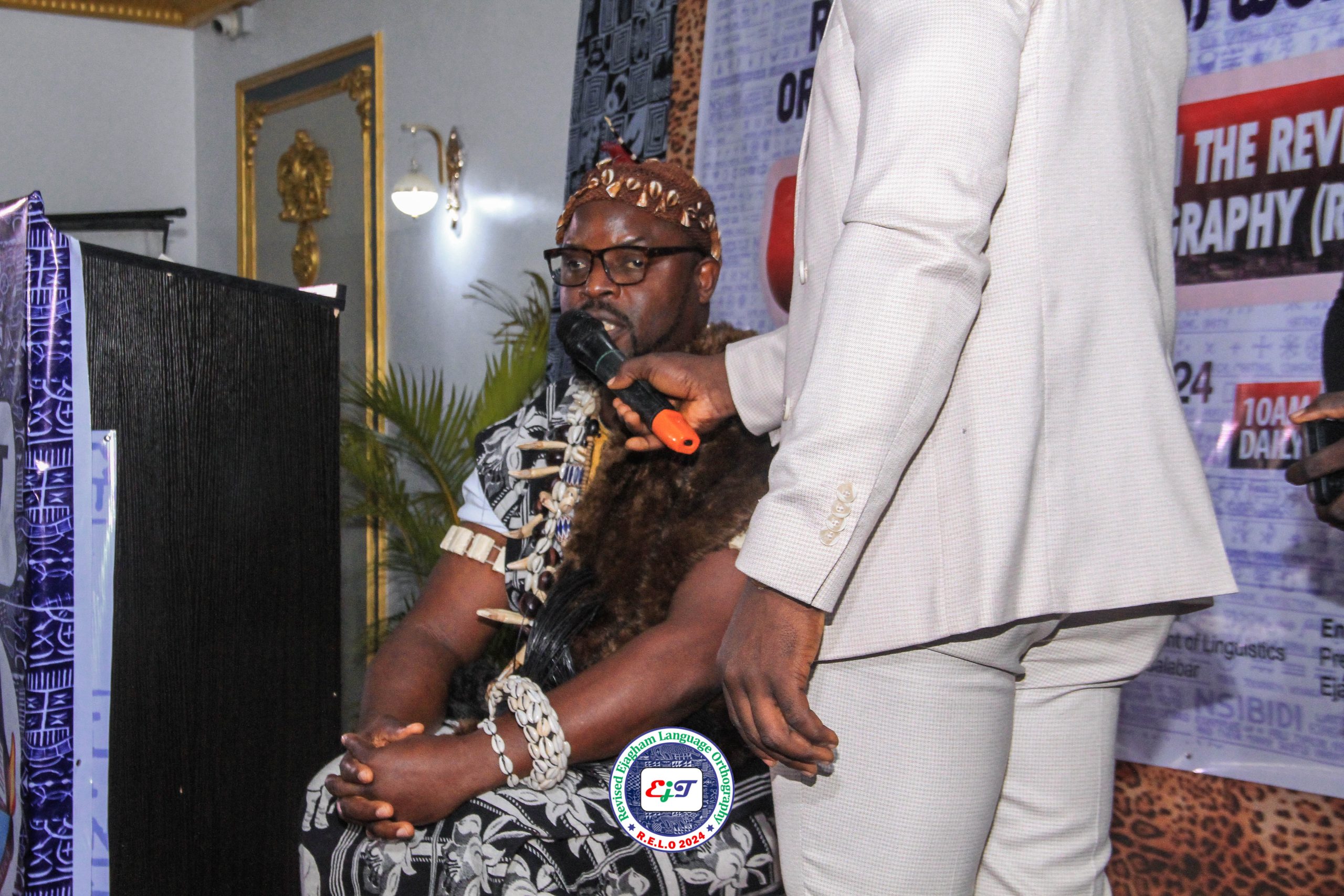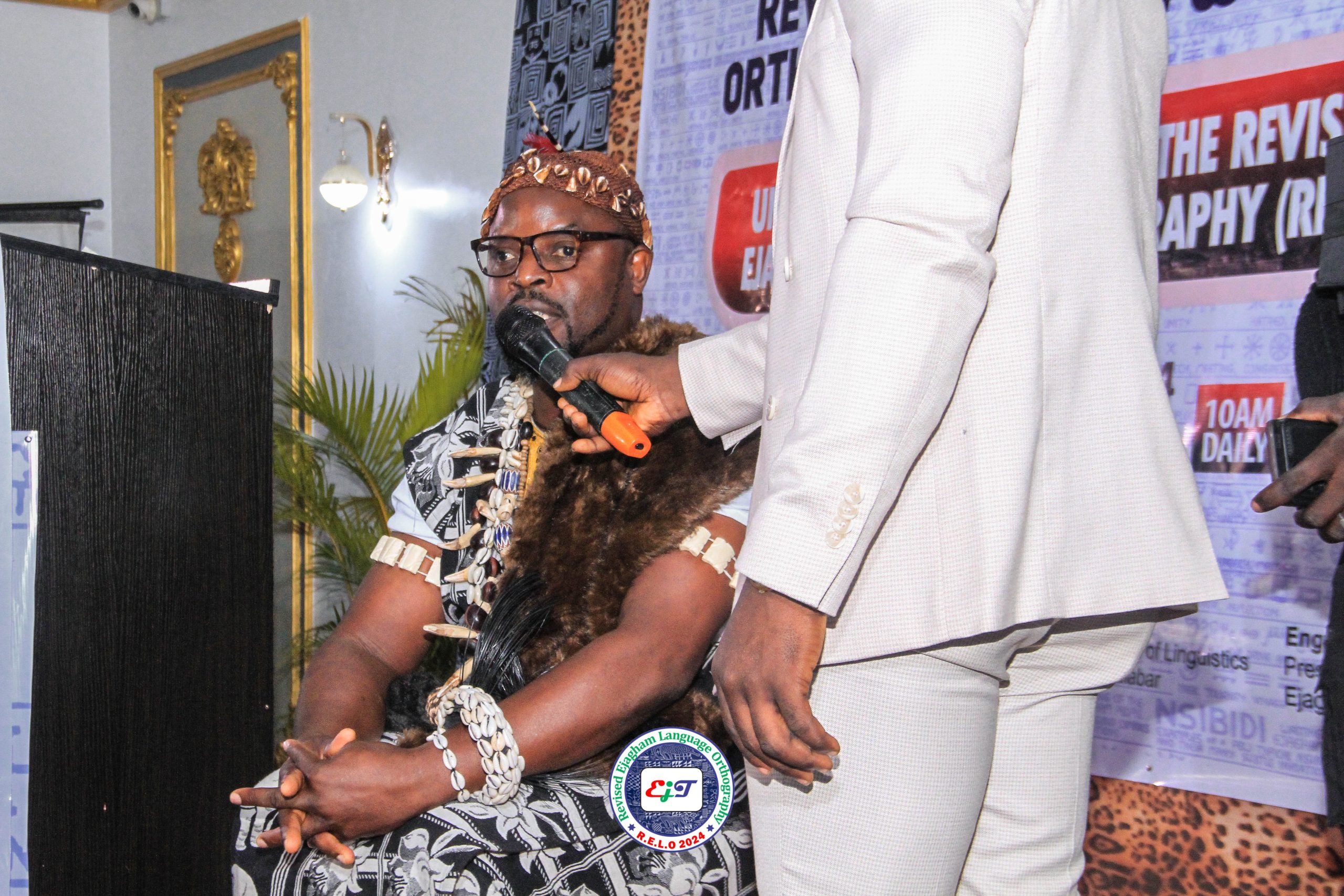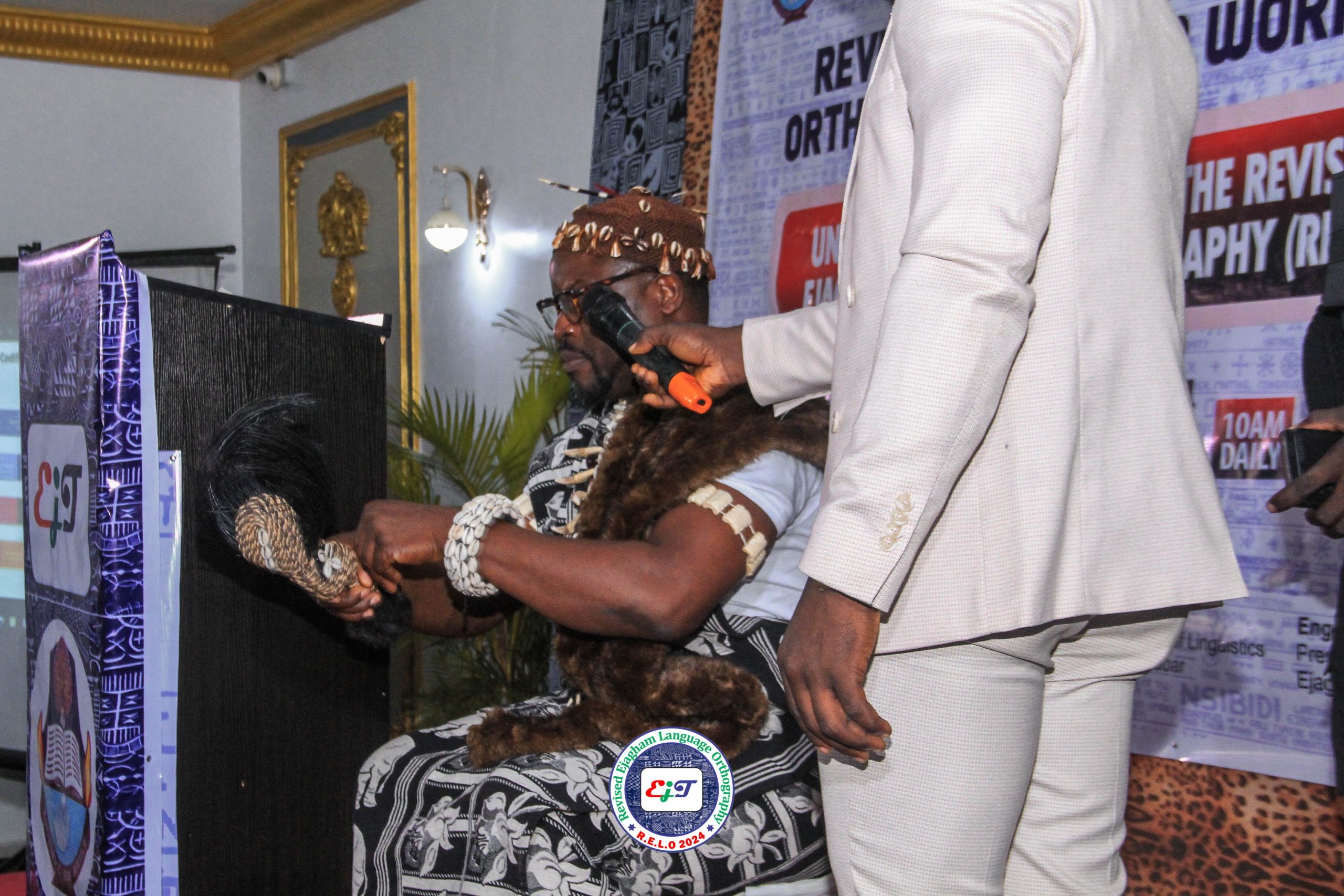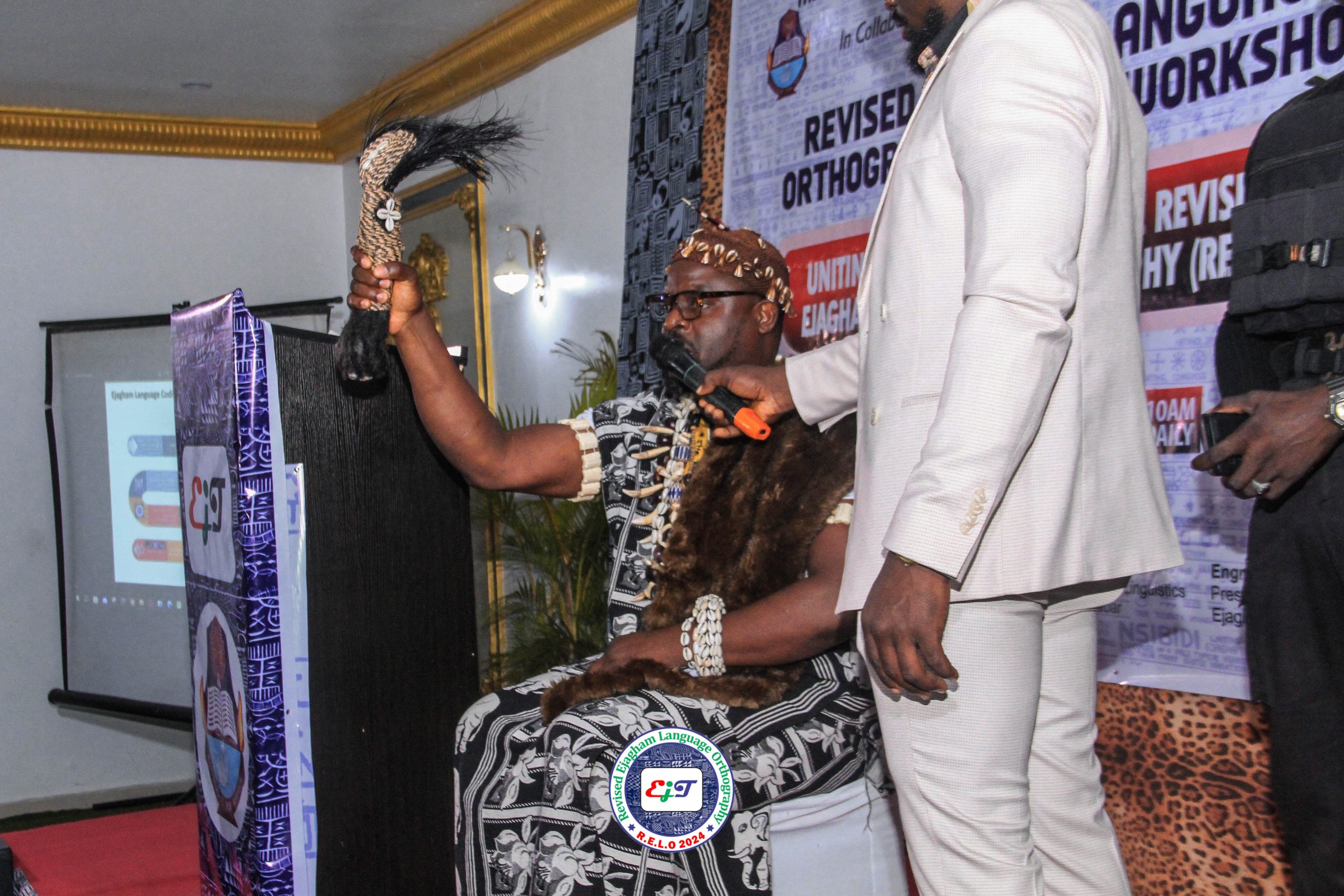

Ejagham Cultural Dances, Music, Plays & Shrines During Special Ceremonies & Celebrations
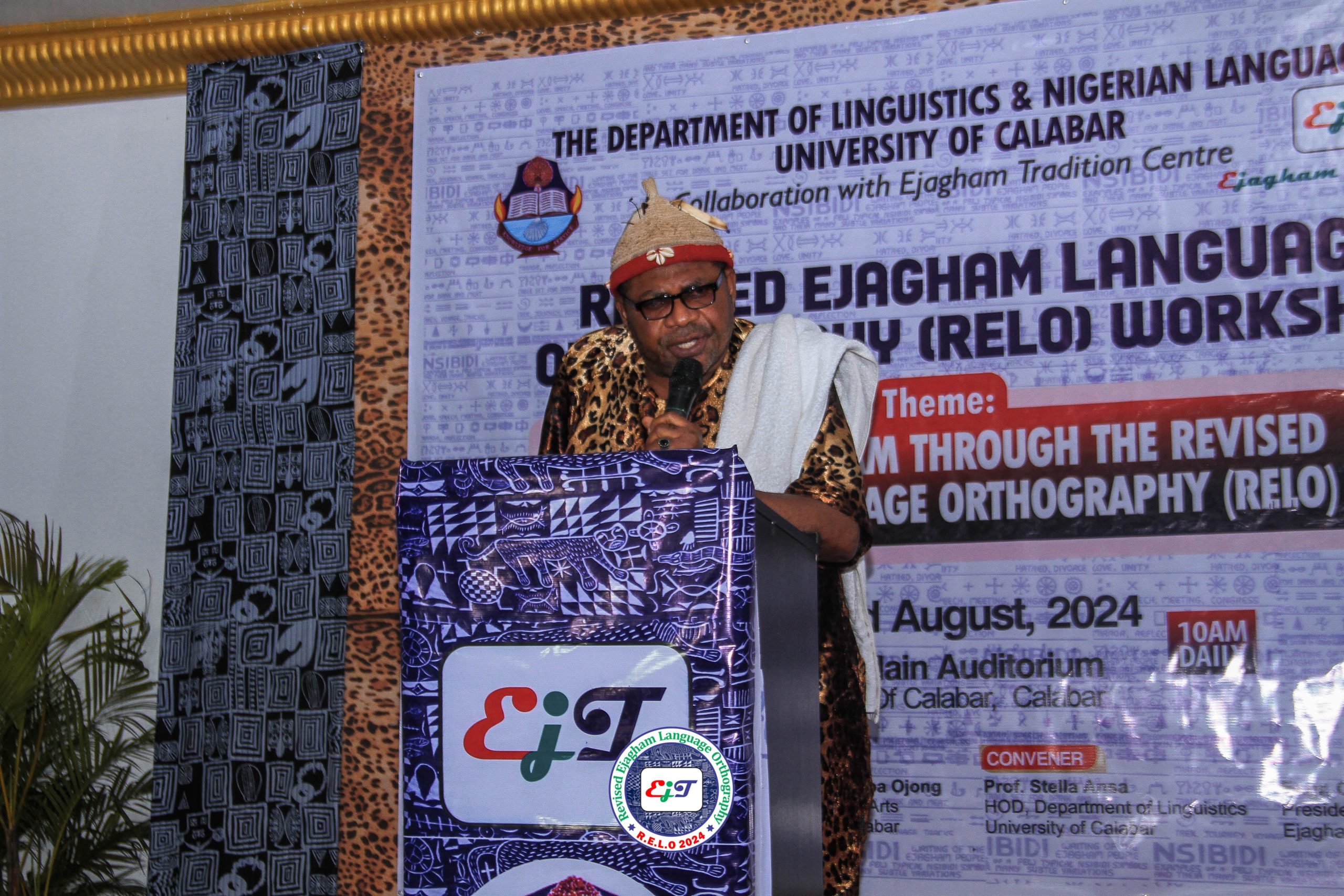
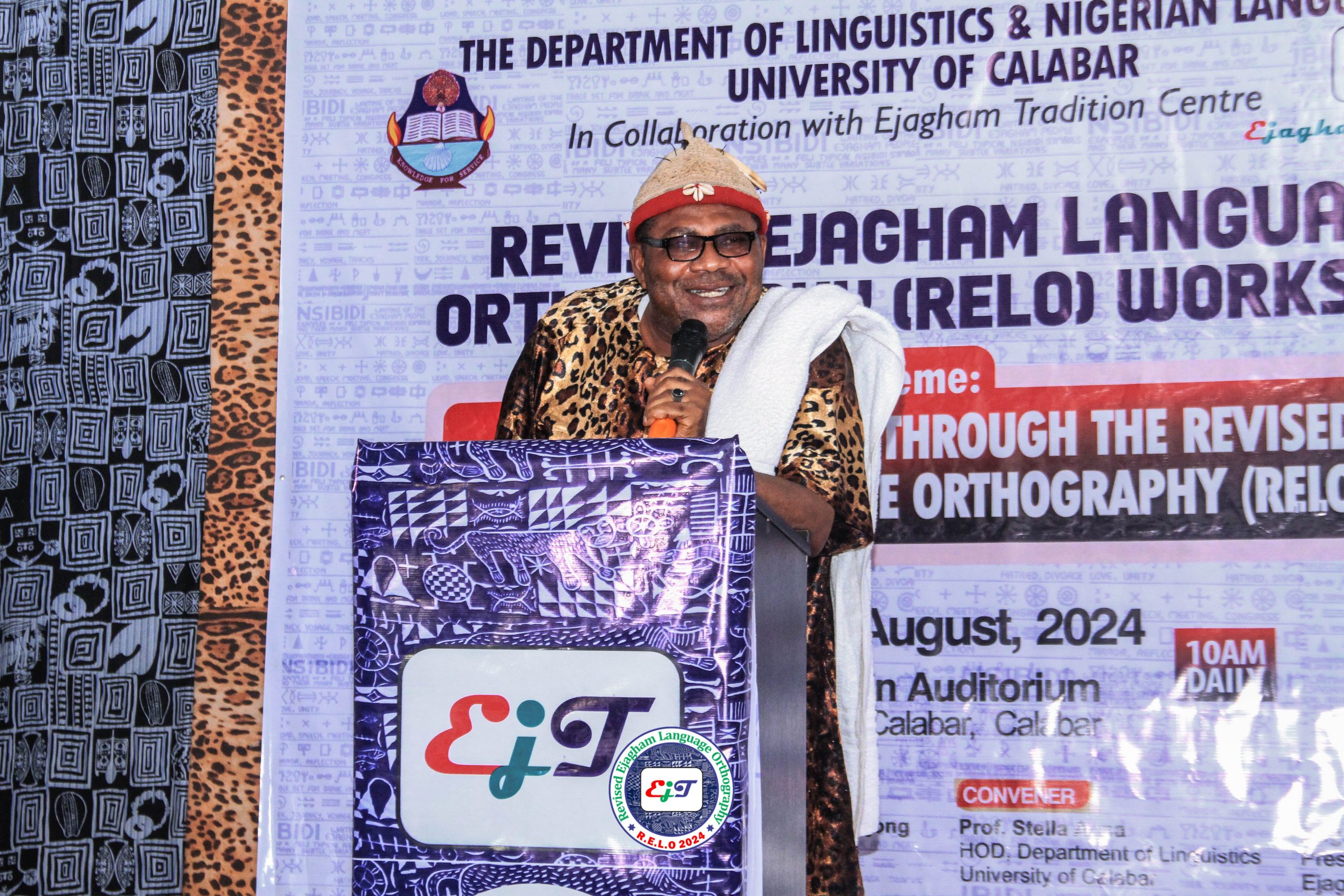
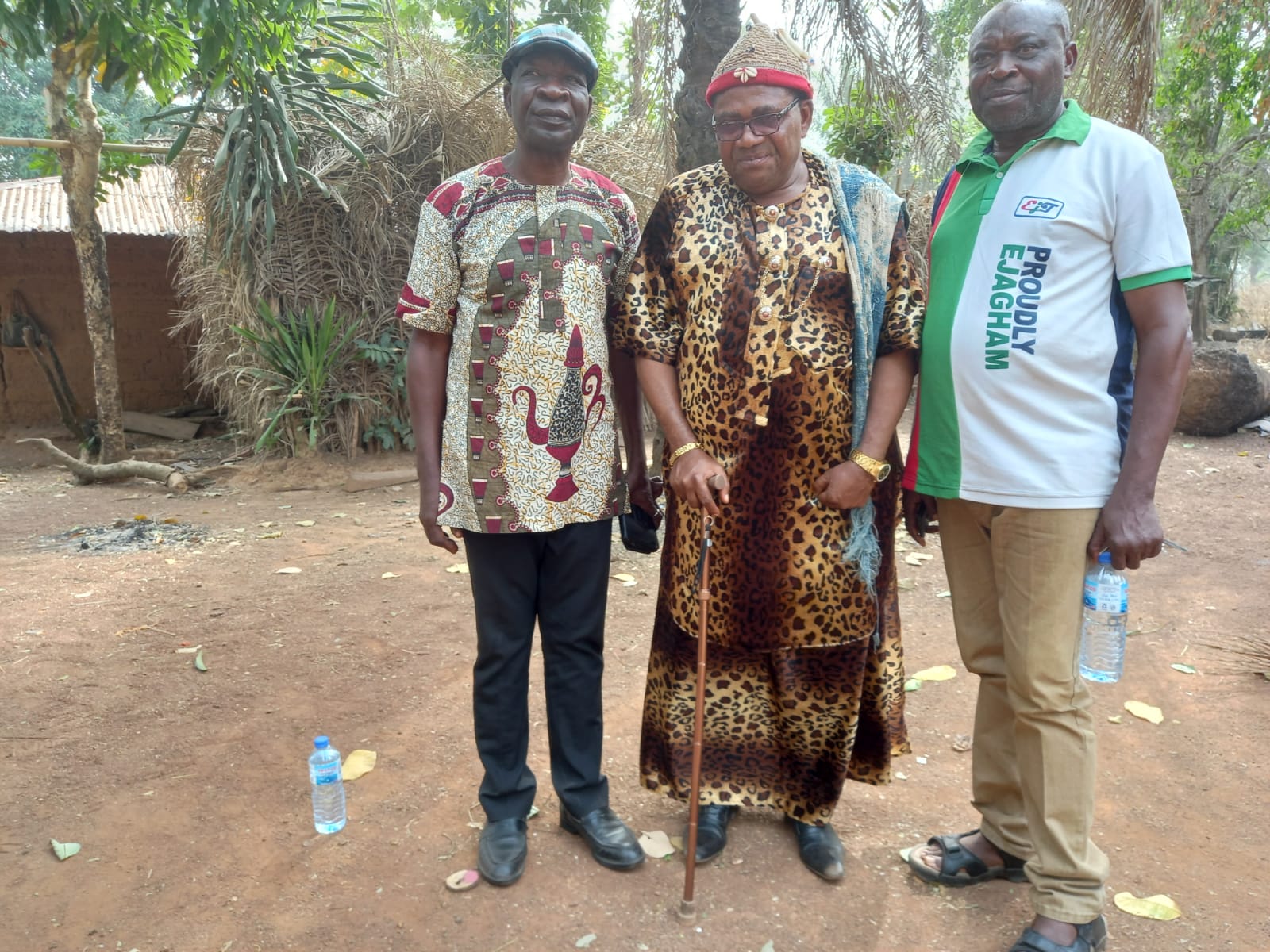
By: Ntufam Solomon Ntui

Ntufam Solomon Ntui
As a multi‑cluster nation, the expression of Ejagham Traditional Practices and Cultural Expressions naturally varies from one cluster to another. These variations are not inconsistencies, they are the very source of Ejagham’s brilliance, diversity, and cultural distinctiveness. Documenting these nuances is essential to ensure they are accurately understood and never misrepresented.
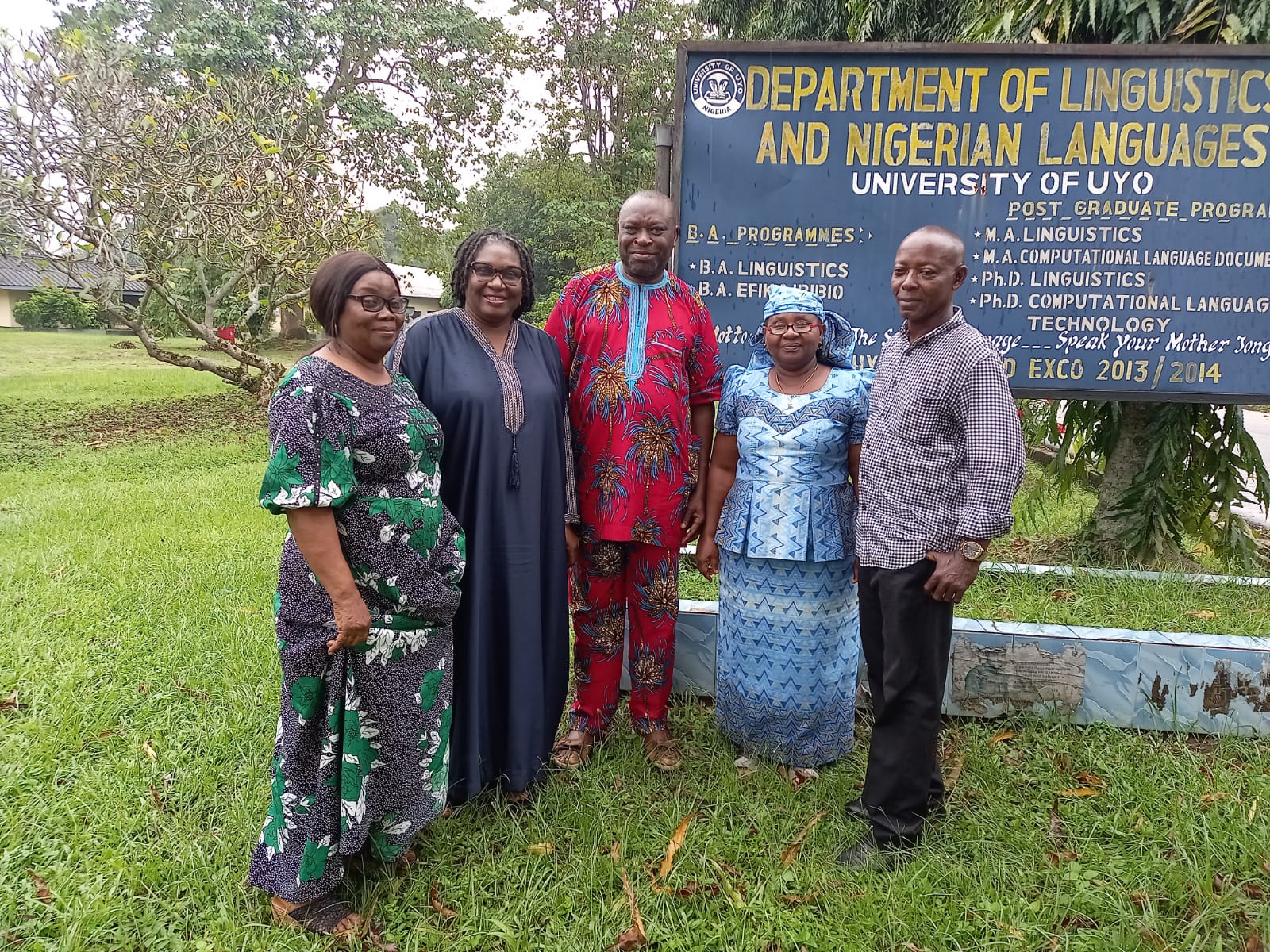
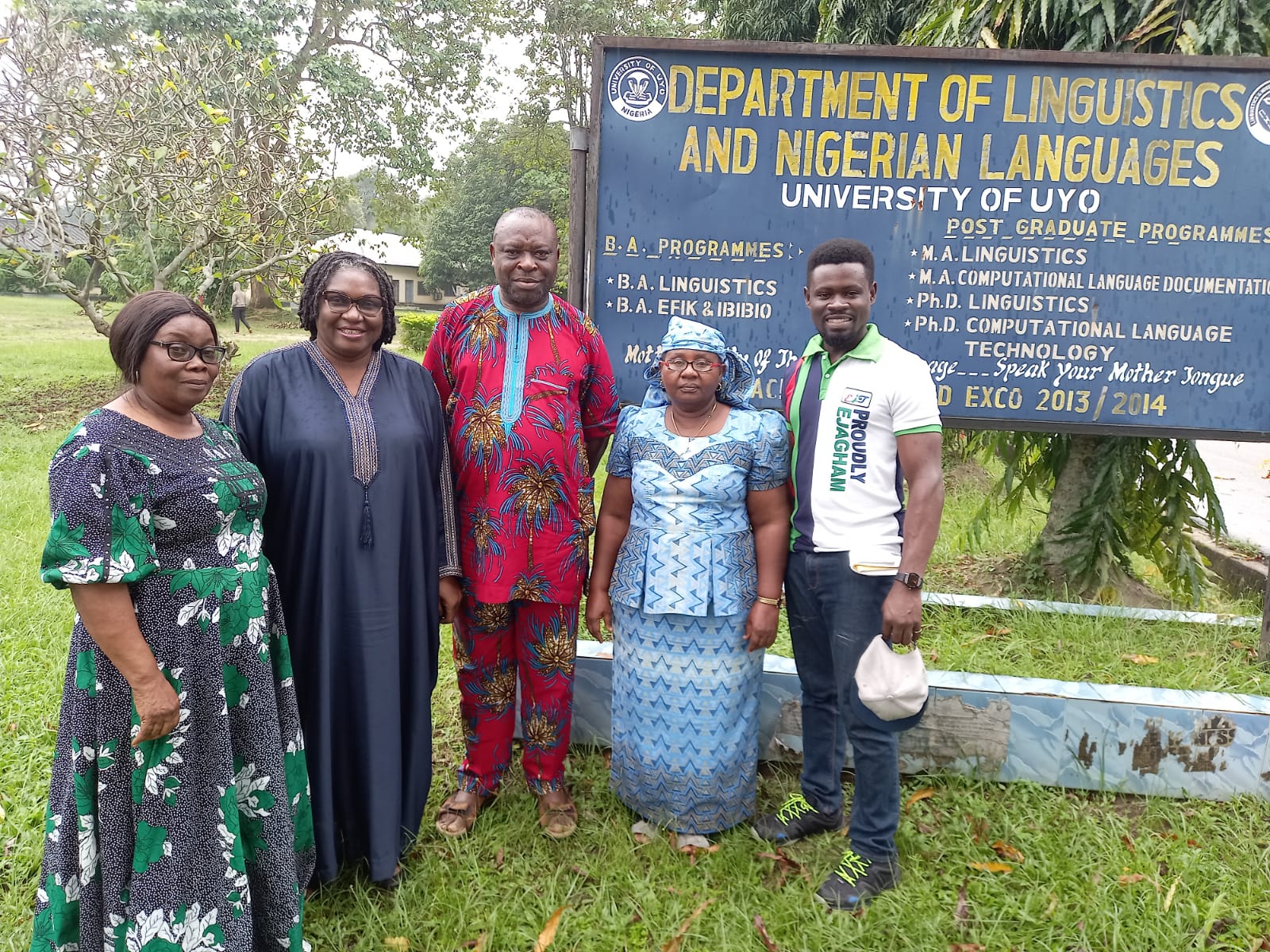
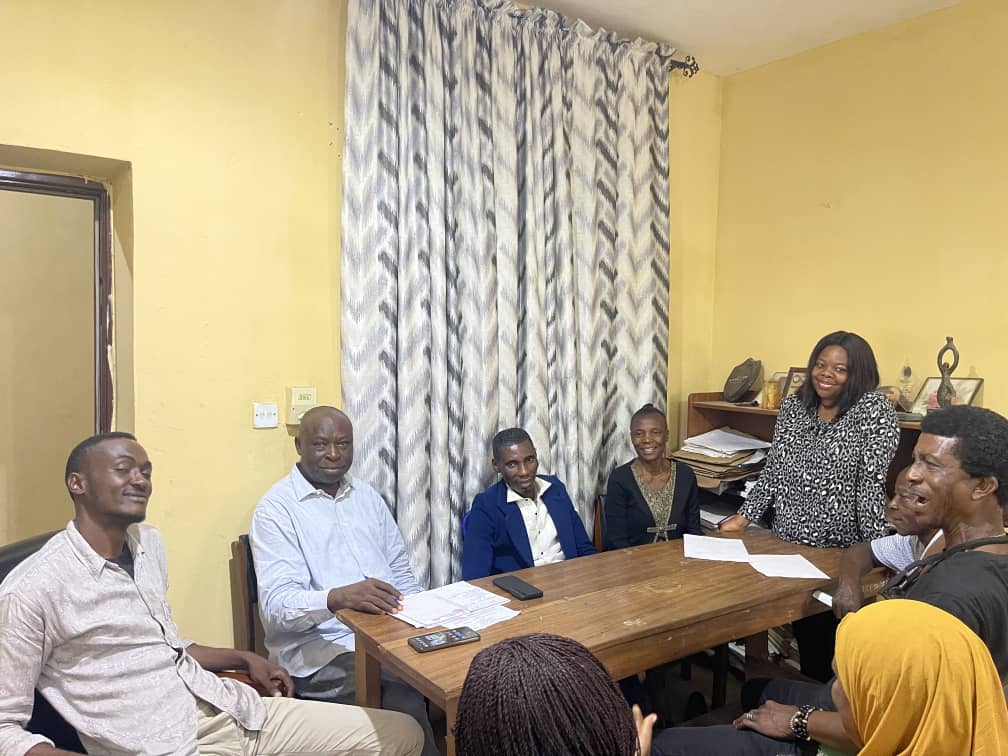
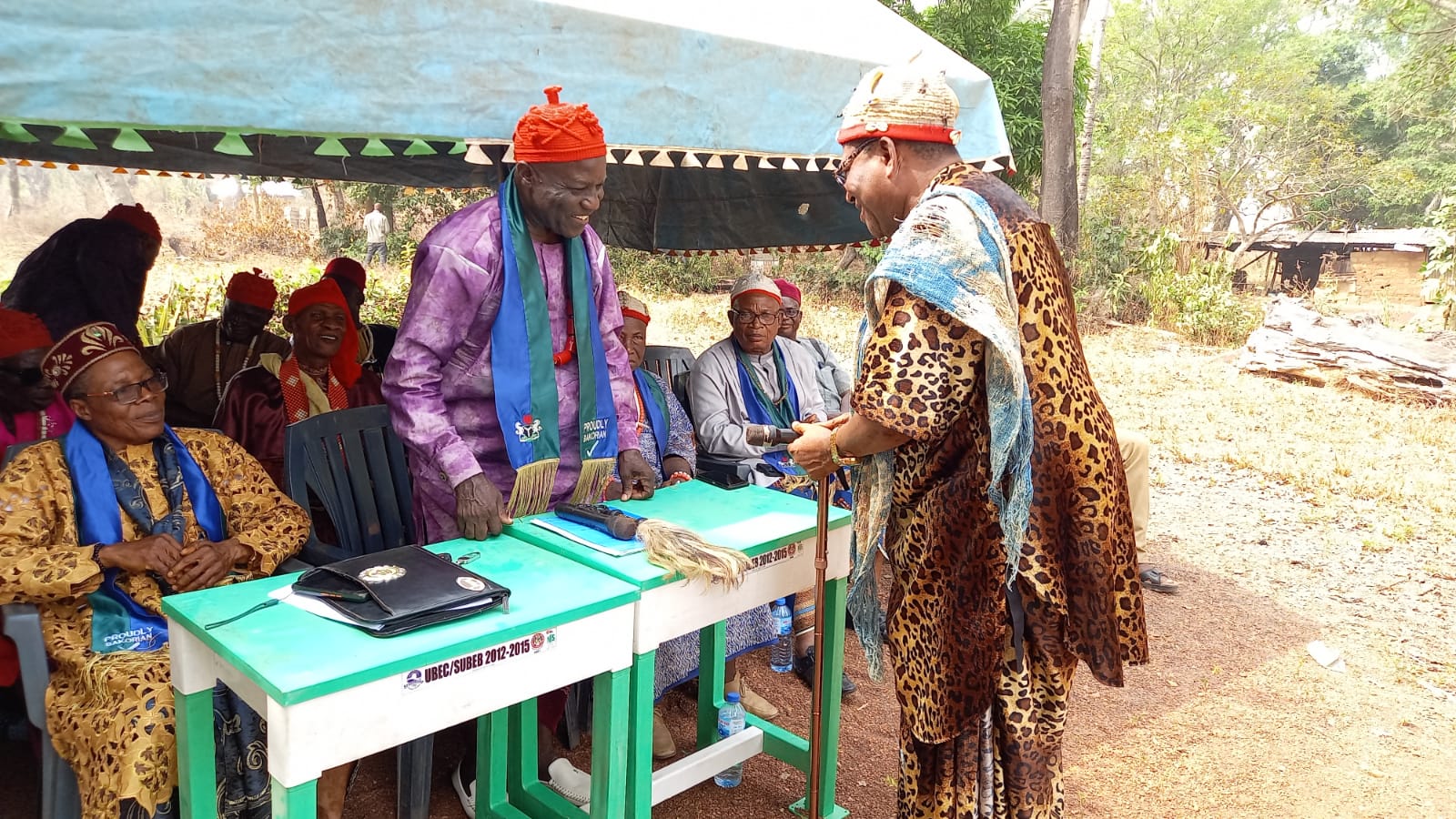
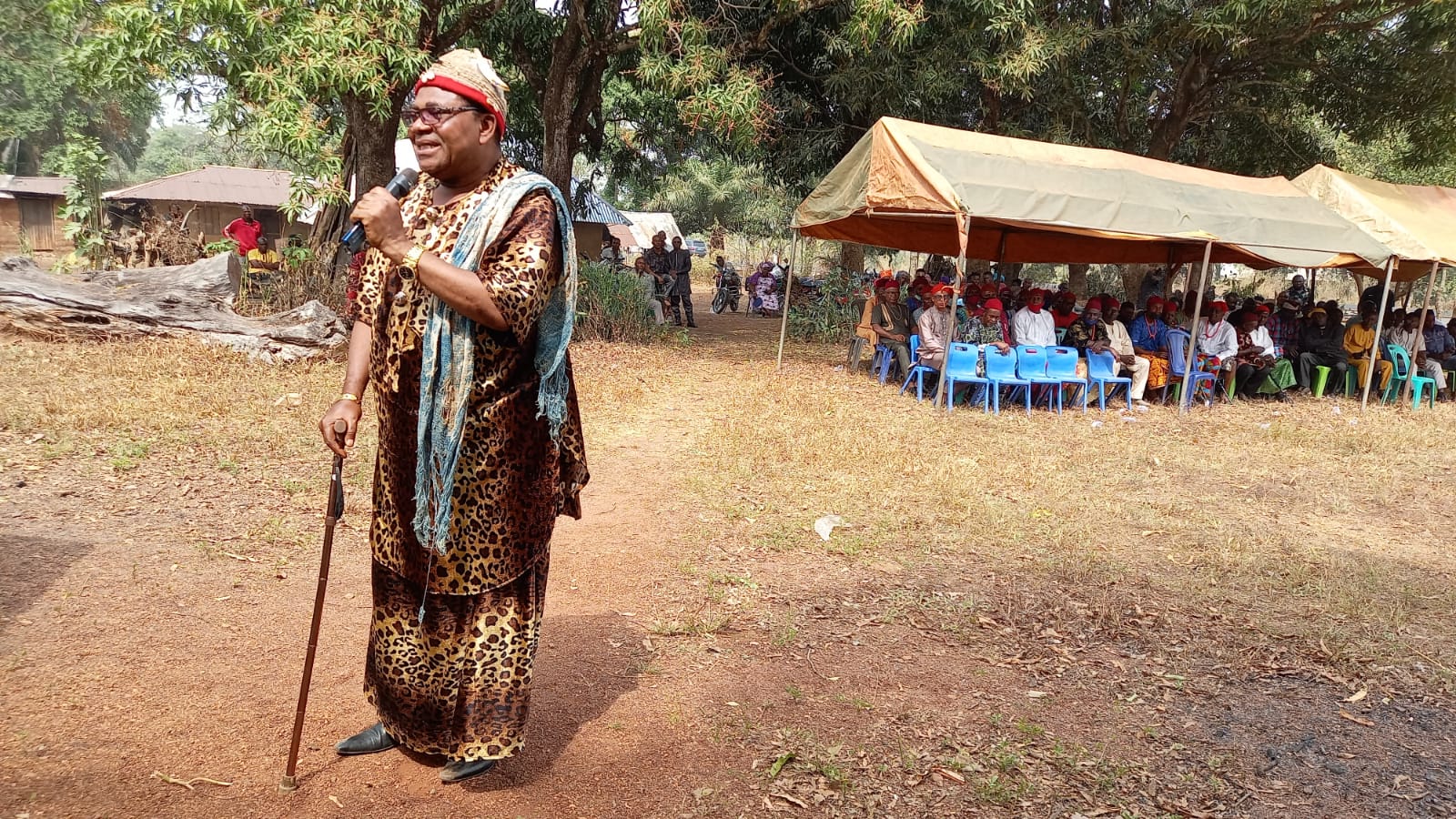
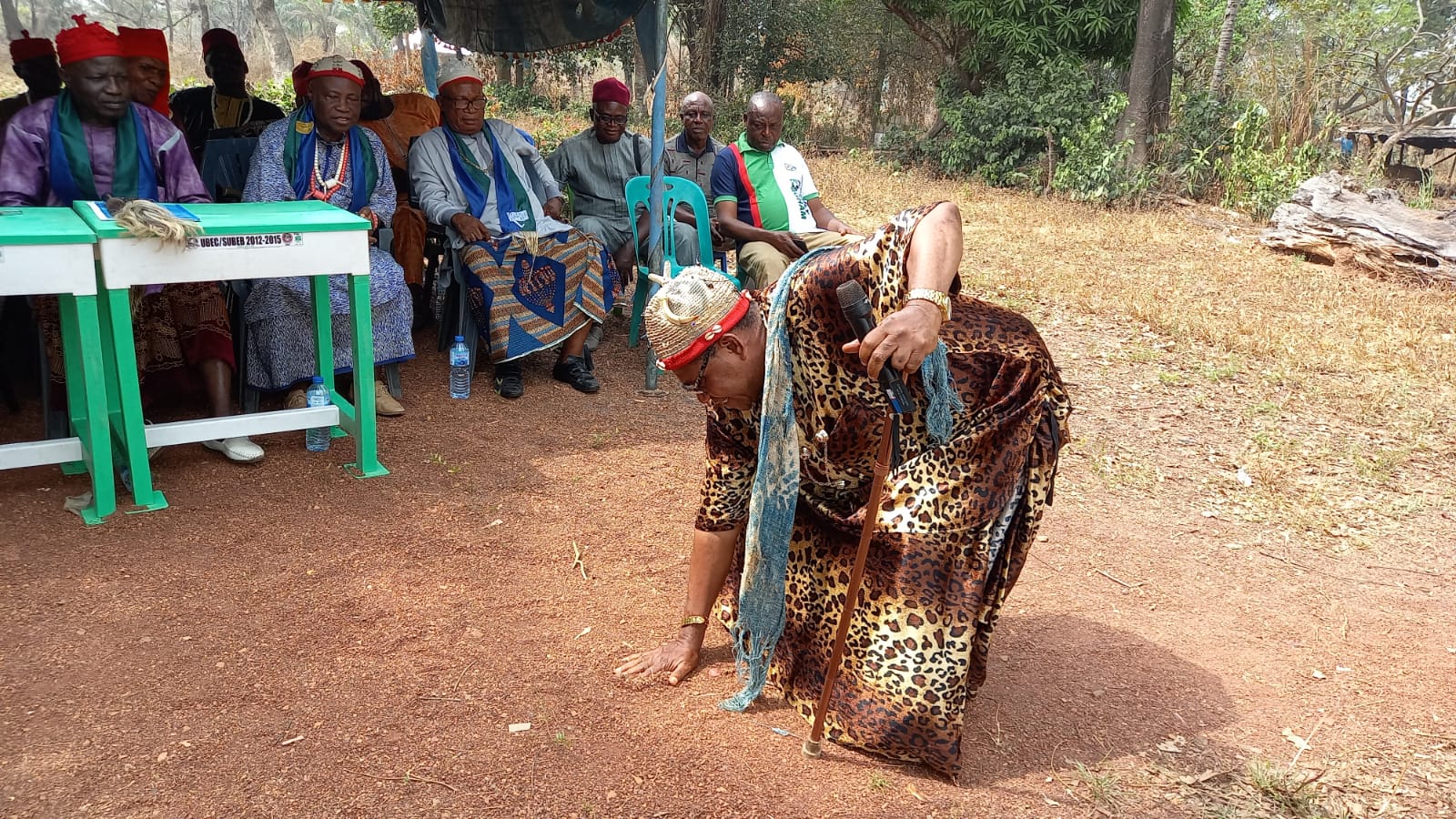
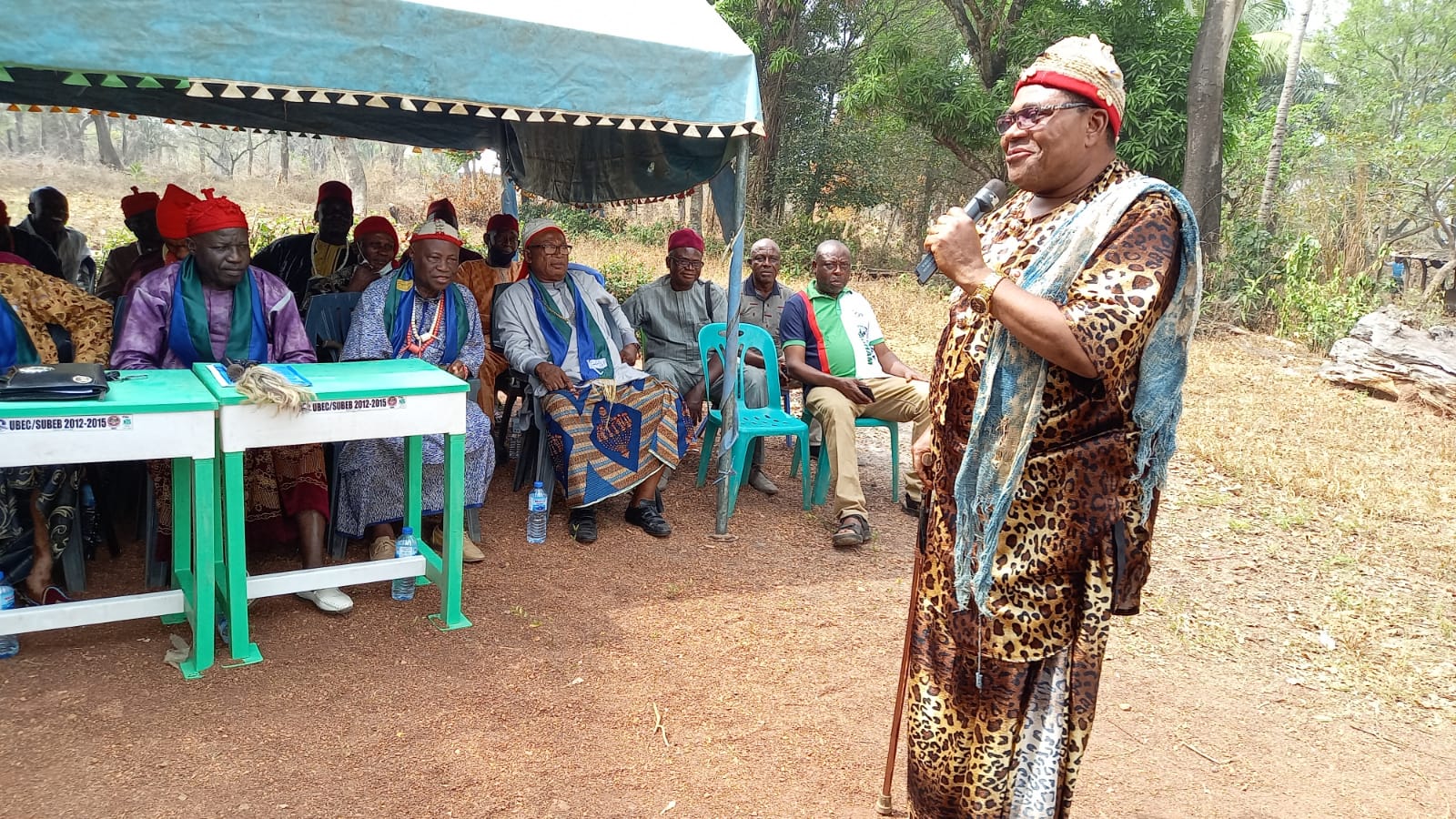
We were fortunate to access a concise cultural write‑up by Ntufam Solomon Ntui of Akamkpa Urban, representing the Ejagham Akamkpa cluster. His contribution offers vivid punchlines that highlight Ejagham dances, music, dramatic performances, and shrines as they appear during special ceremonies and communal celebrations. Although articulated through the Akamkpa lens, many of these cultural elements resonate across other Ejagham clusters.
While Ntufam Solomon Ntui’s punchlines are clear and evocative, we have expanded upon them by providing anthropological context to the Ejagham Traditional Practices and Cultural Expressions he outlined. This additional framing deepens understanding and offers broader insight into the heritage elements that define Ejagham identity.
1. Ache Aboh
Cheered mostly amongst the female folk through hand‑clapping and fine‑tuned lyrics with songs of the past for evening gatherings and entertaining visitors.
Ache Aboh is more than an evening entertainment; it is a female-centered social archive. Through rhythmic hand‑clapping and lyrical recall of “songs of the past,” women curate communal memory.
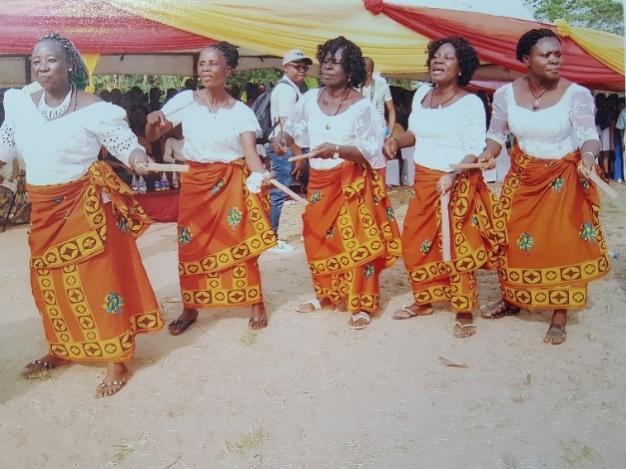
Ache Anoh group perform at Oban Ackachak Festival at Oban Town
A gendered space of authority: Ache Aboh operates as a distinctly gendered space of authority in Ejagham society, where women assume the role of historians through song. In this setting, they do more than entertain; they interpret and curate the community’s past, transforming memory into performance.
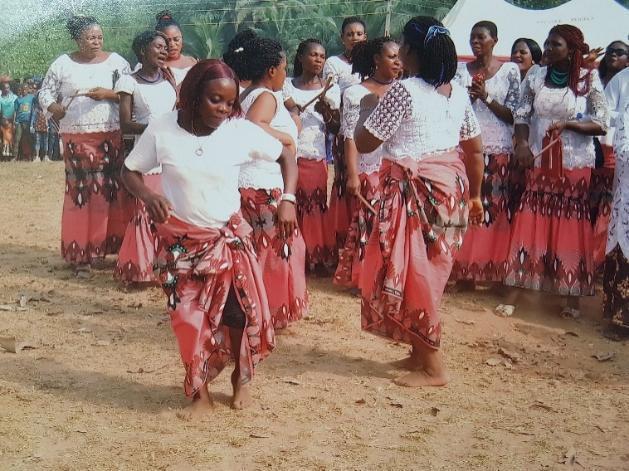
Ache Anoh group perform at Oban Ackachak Festival at Oban Town
A socialization arena: As they sing, younger girls observe and absorb the emotional tone, humor, and moral lessons embedded in the lyrics, making Ache Aboh an informal but powerful arena of socialization. It is here that girls learn how stories are told, how emotions are expressed, and how communal values are transmitted across generations.
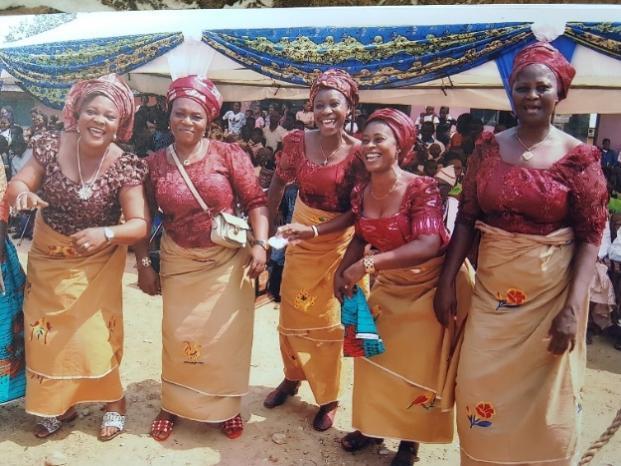
Ache Anoh group perform at Oban Ackachak Festival at Oban Town
A hospitality ritual: At the same time, Ache Aboh serves as a ritual of hospitality. Its performance during evening gatherings or in the presence of visitors reinforces the Ejagham ethic of warmth and welcome, using music to create a shared emotional atmosphere. Through this practice, social bonds are strengthened, and communal identity is affirmed.
In societies where oral tradition forms the backbone of historical knowledge, Ache Aboh becomes a vital cultural institution. It preserves genealogies, moral codes, and collective memory, ensuring that the past remains alive in the present through the voices of women who carry and transmit the community’s stories.
2. Nsae‑Biji
Sit‑together music/choruses mostly during vigils to console mourners and visitors.
Collective grief management: Nsae‑Biji carries deep anthropological significance as a communal mechanism for managing grief. In its performance, private sorrow is transformed into a shared emotional experience, allowing mourners to feel held rather than isolated.
Social cohesion: The music creates a space where individuals are never left alone with their pain; instead, the chorus wraps them in a communal embrace that softens the weight of loss.
Ritualized empathy: Because the singing is collective and no single voice dominates, the ritual expresses a form of empathy that is both structured and symbolic. It affirms unity, reminding everyone that grief belongs to the community as a whole.
Through this practice, the Ejagham reinforce their belief that death is not an individual burden but a communal event, one that calls for collective presence, shared emotion, and mutual support.
3. Echi‑Ekpah
All‑open women mask in a procession marking an important community event, e.g., a chieftaincy presentation ceremony and events of land/water/air purification using special prayers for blessings and thanksgiving.
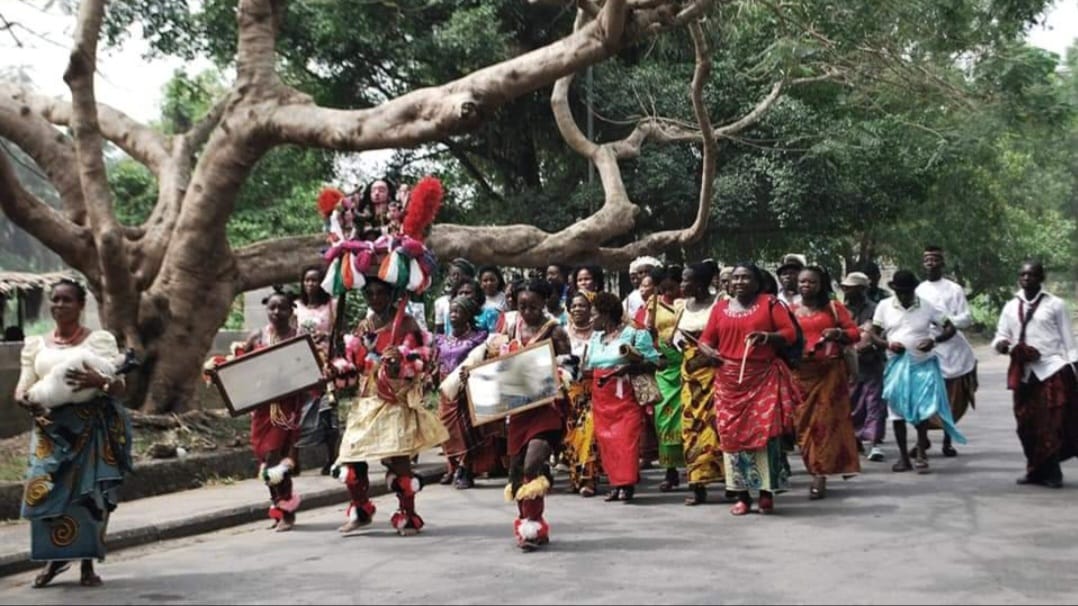
Ekpa Performance from Ejagham Qua in Calabar
Women’s Spiritual Authority: Echi‑Ekpah stands as a powerful expression of women’s spiritual authority in Ejagham society. In this ritual, women act as custodians of purity, responsible for cleansing and blessing the land, water, and air. Their movements, prayers, and the presence of the mask itself affirm their role as guardians of environmental and spiritual balance, demonstrating that the community’s well‑being is inseparable from the ritual work performed by women.
Community Renewal: The mask carried in the Echi‑Ekpah procession symbolizes the collective face of the community, presented in a renewed and purified form. Each appearance of the mask marks a moment of communal rebirth, where the spiritual atmosphere is refreshed and the social fabric reaffirmed. Through this ritual, the community symbolically sheds impurity and steps into a renewed state of harmony and blessing.
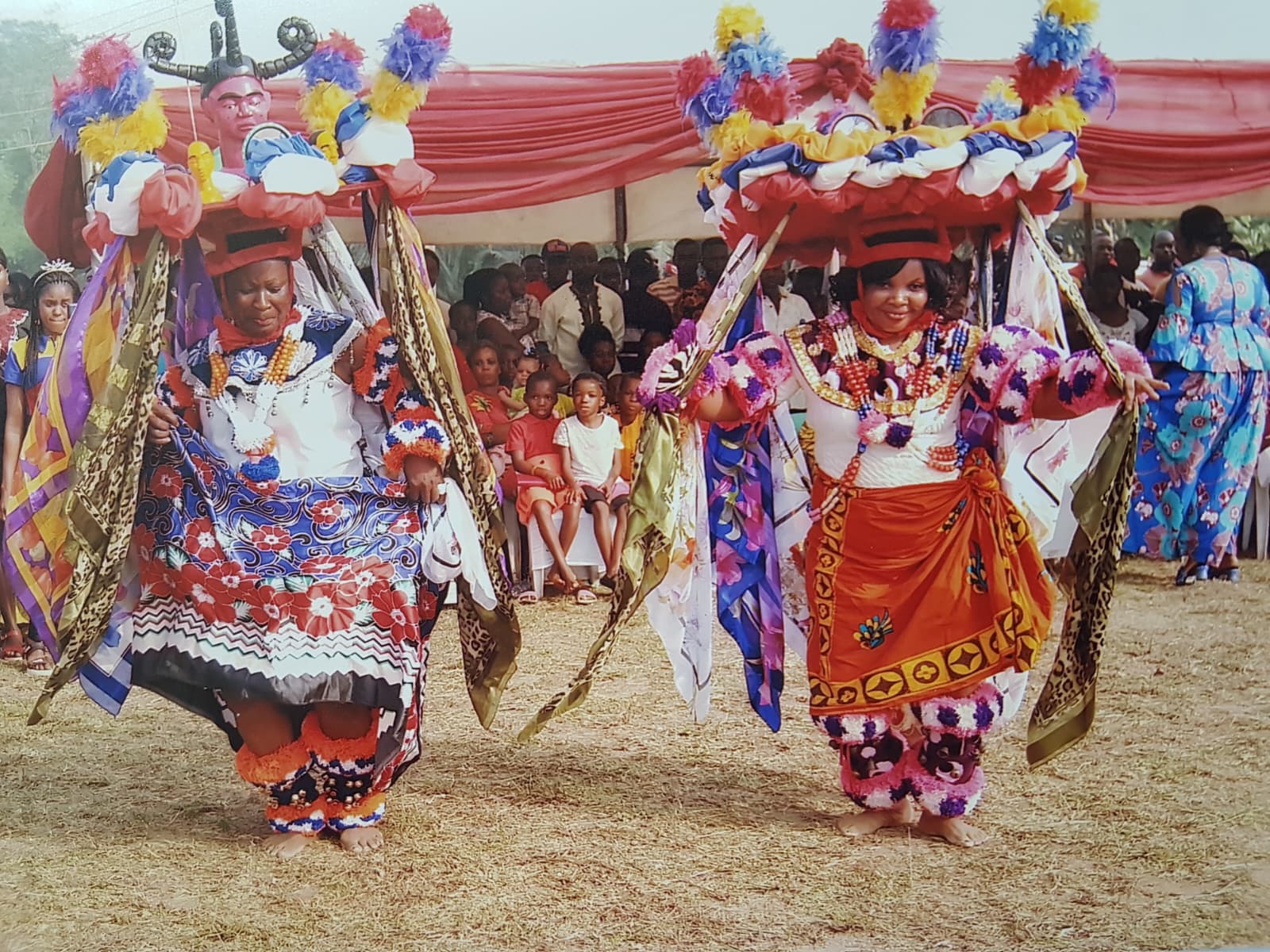
Ekpa Performance at Oban Ackachak Festival at Oban Town
Political Endorsement: When Echi‑Ekpah appears during chieftaincy ceremonies, it serves as a visible sign of ancestral approval. The presence of the women’s mask signals that the spiritual realm recognizes and legitimizes the leadership being installed. In this way, the ritual becomes an essential political instrument, linking governance to ancestral sanction and ensuring that authority is grounded in both cultural and spiritual order.
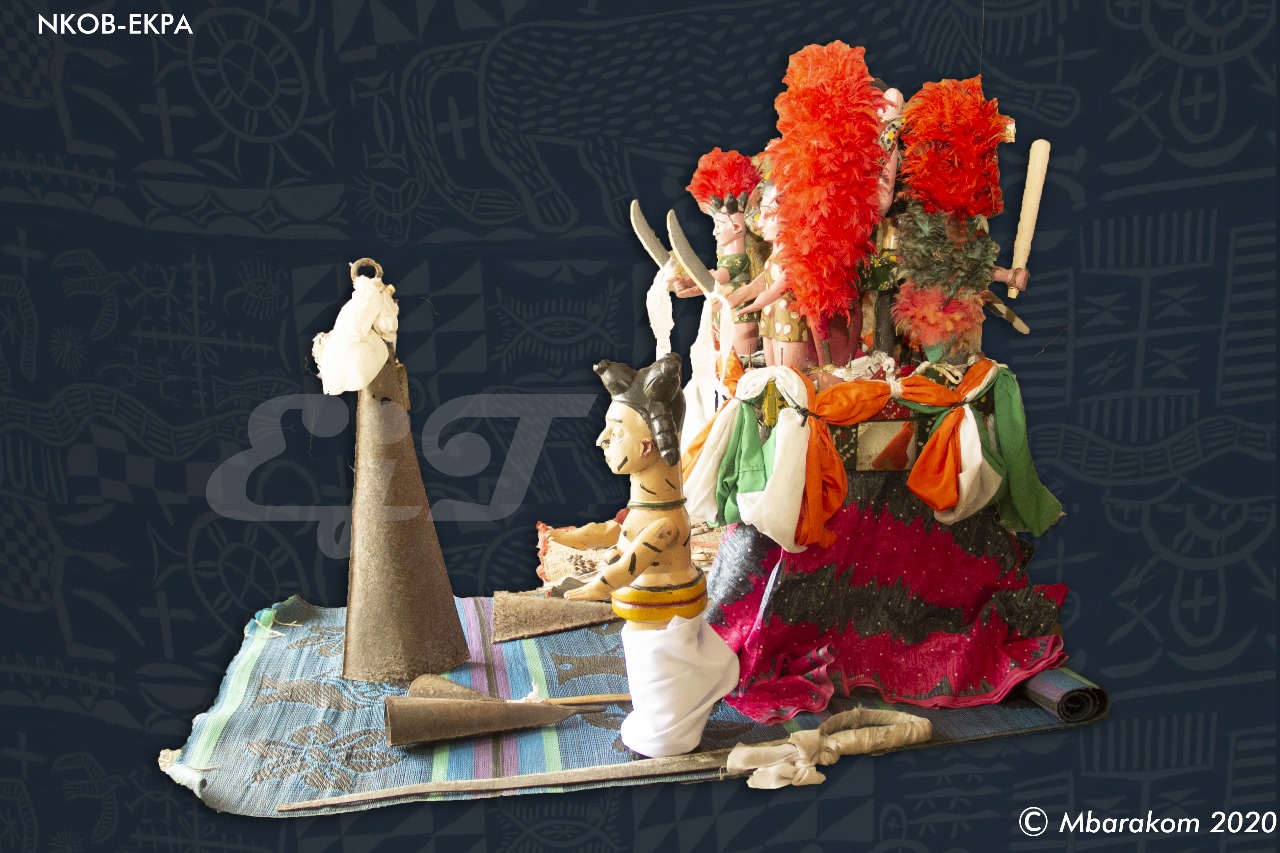
Nkob Ekpa from Mbarakom Community
These dimensions make Echi‑Ekpah one of the clearest and most compelling examples of female ritual power in Ejagham cosmology, revealing how women shape the spiritual, social, and political life of the community through ceremonial performance.
4. Oborama
A night dance amongst female natives only, crying and praying against evil spirits endangering lives and progress of the community. Anyone with such evil spirits becomes impotent or childless.
Spiritual Warfare Through Performance: Oborama unfolds as a dramatic form of spiritual warfare, where dance becomes a protective technology against unseen forces believed to threaten the community. Through rhythmic movement, crying, and chanting, women confront malevolent spirits directly, transforming the performance into an act of defense. In this ritual space, the body becomes both weapon and shield, asserting the community’s determination to resist spiritual harm.
Moral Regulation: Embedded within Oborama is a moral framework that shapes social behavior. The belief that evil spirits can cause impotence or childlessness serves as a powerful deterrent against actions considered harmful or antisocial. By linking spiritual danger to personal and familial consequences, the ritual reinforces ethical conduct and communal responsibility. Oborama thus operates not only as a spiritual intervention but also as a mechanism for maintaining social order.
Night Symbolism: The choice of night for Oborama is deeply symbolic. Darkness traditionally represents vulnerability, uncertainty, and the presence of unseen forces. By performing the ritual at night, women reclaim this space, transforming it from a realm of fear into one of empowerment. Their collective presence and ritual actions assert control over the spiritual landscape, demonstrating that even in darkness, the community is protected and guided.
Together, these featuress reveal how Oborama has historically enabled Ejagham women to guard the spiritual health of the community, using performance, symbolism, and moral authority to maintain balance and ensure collective well‑being.
5. Oni‑Mgbe
Fertility ceremonies performed by a special priest and priestess.
A Reproductive Governance System: Oni‑Mgbe operates as a reproductive governance system within Ejagham society, ensuring the continuity of lineage through ritual oversight. Fertility is treated not merely as a private concern but as a matter of communal stability, and the ceremony provides a structured cultural mechanism for addressing reproductive challenges. Through its practices, Oni‑Mgbe safeguards the future of families and clans, reinforcing the idea that fertility is central to social continuity.
A Gender‑Balanced Ritual: The officiation of Oni‑Mgbe by both a priest and a priestess reflects the Ejagham understanding of cosmic duality. Male and female ritual actors work together, symbolizing the balance required for life to flourish. Their joint presence affirms that fertility arises from the harmonious interaction of complementary forces, and that spiritual authority is shared rather than monopolized. This gender balance underscores the cultural belief that creation itself is a cooperative act.
A Healing Rite: Beyond its symbolic dimensions, Oni‑Mgbe functions as a healing rite that addresses infertility through both spiritual and herbal interventions. Ritual prayers, divination, and plant‑based remedies are combined to restore equilibrium in the body and spirit. Infertility is understood as a disruption in the relationship between individuals and the ancestral or natural world, and the ceremony seeks to mend that relationship. In this way, Oni‑Mgbe integrates medicinal knowledge with spiritual insight, offering a holistic approach to reproductive health.
On the whole, these dimensions reveal that Oni‑Mgbe reflects the Ejagham worldview in which fertility is both biological and spiritual, requiring ritual balance, communal support, and the combined authority of male and female officiants.
6. Mmone‑Nkim
Raising and preparing girls as virgins and for their maidenhood.
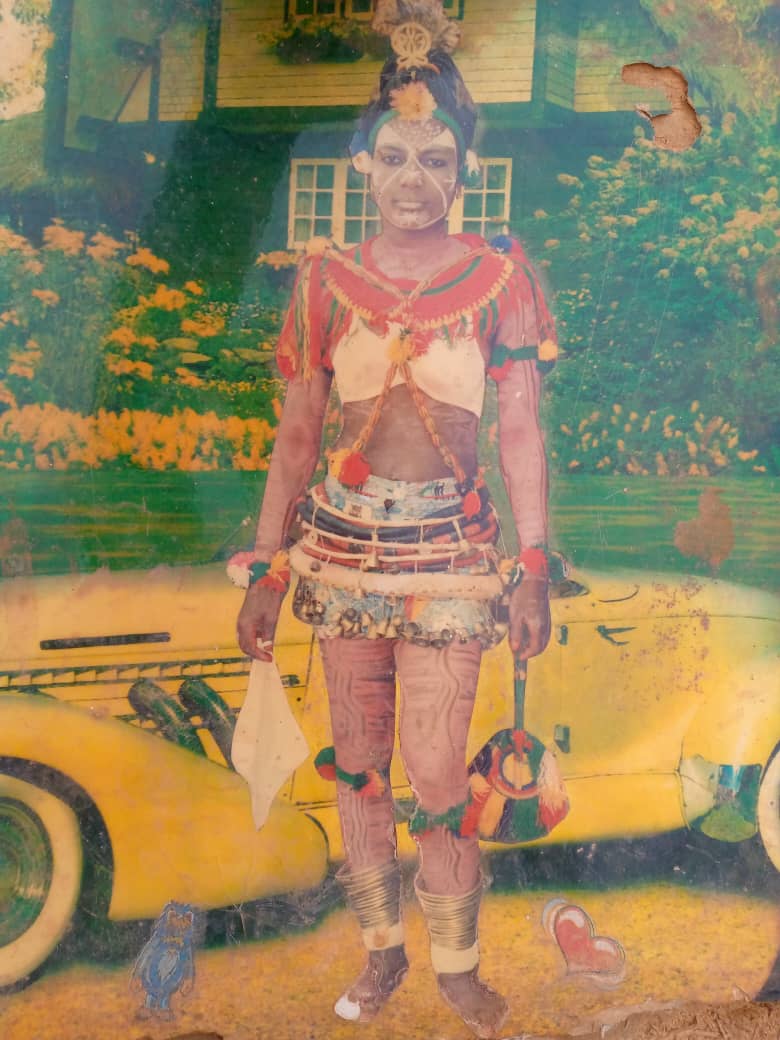
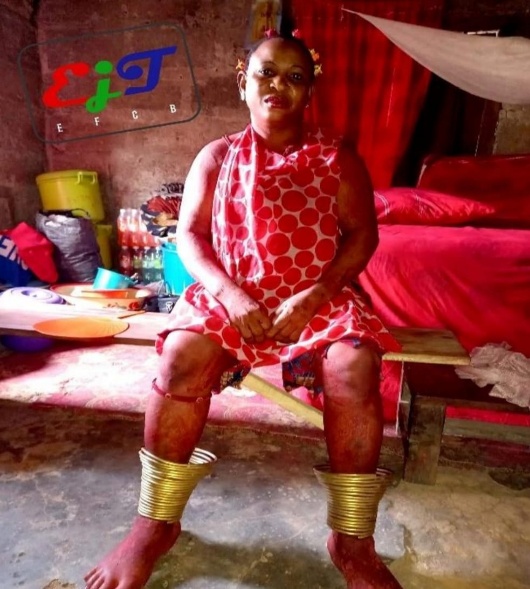
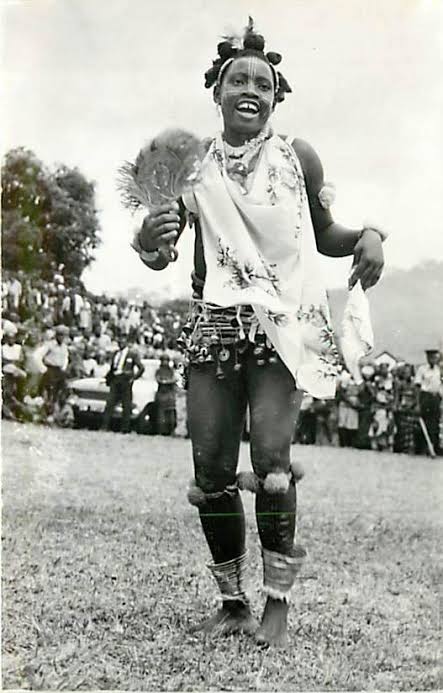
Abon-okim
Rites of Passage: Mmone‑Nkim functions as a formal rite of passage, marking the transition from childhood into socially recognized womanhood. Through its structured practices, the ritual publicly acknowledges a girl’s new status and prepares her to assume the responsibilities and expectations associated with adult female identity in Ejagham society. It is a moment of transformation, where childhood innocence gives way to cultural maturity.
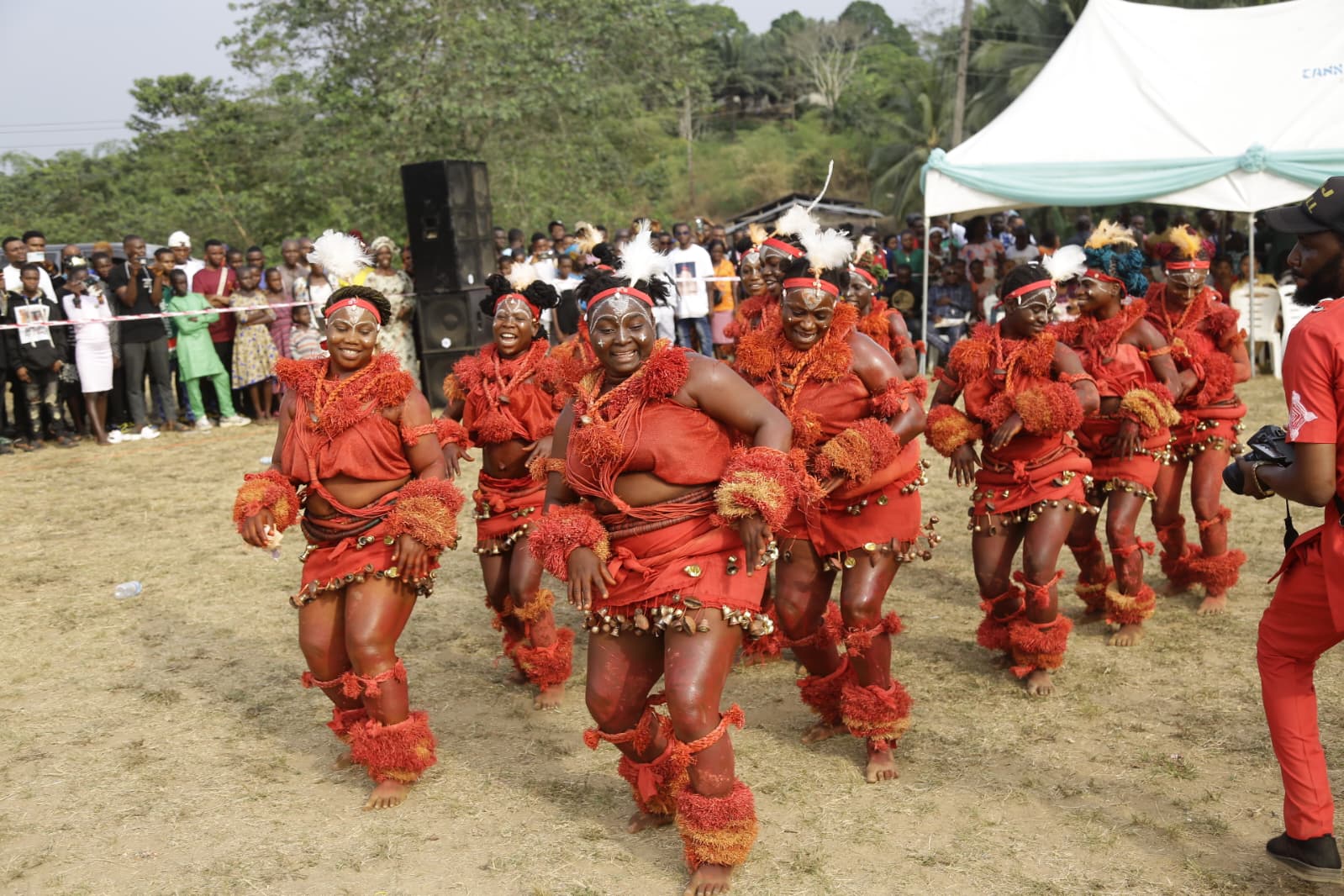
Monenkim Performance at Oban Ackachak Festival at Oban Town
Moral Education: Embedded within Mmone‑Nkim is a system of moral education that teaches discipline, modesty, and the behavioral codes valued by the community. Girls learn how to conduct themselves with dignity, how to uphold communal expectations, and how to embody the virtues associated with respectable womanhood. This instruction ensures that the transition to adulthood is not merely biological but also ethical and social.
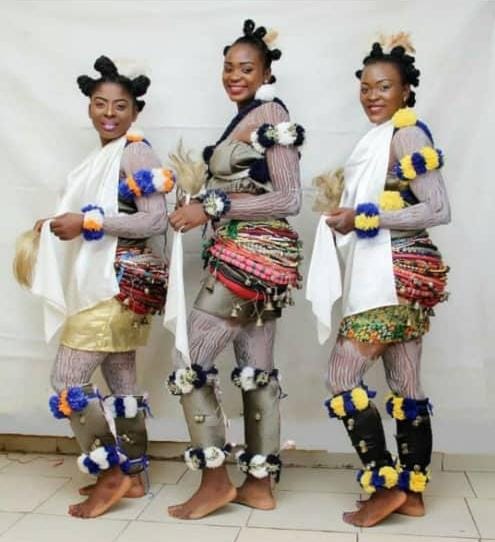
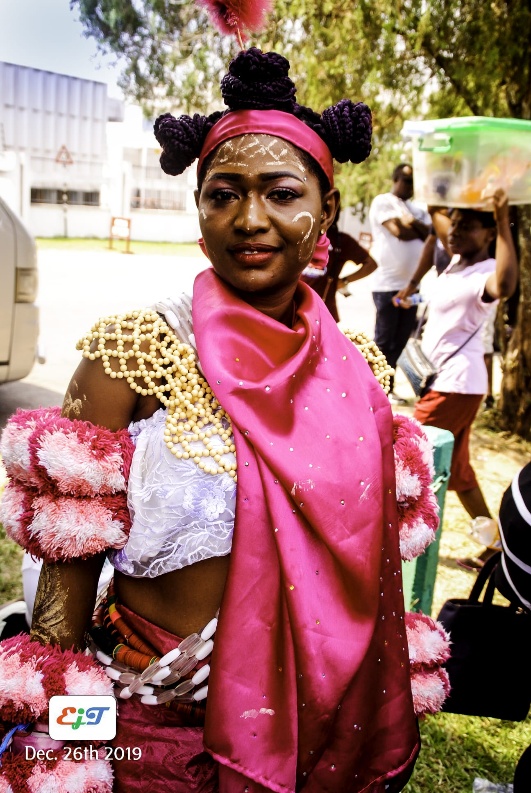
Abon-okim
Body Symbolism: The ritual also carries deep symbolic meaning related to the body. Virginity is framed as a sign of purity, strength, and ancestral pride, representing both personal integrity and the honor of one’s lineage. In this context, the maiden’s body becomes a cultural symbol, reflecting ideals of restraint, respect, and continuity. The emphasis on virginity underscores the belief that the body is not only physical but also a vessel of cultural value.
These characterizations make Mmone‑Nkim central to gender identity formation in Ejagham society, shaping how girls understand themselves, their roles, and their place within the community.
Bangles worn in celebrating the grown‑up maiden for domestic life and marriage. Other ornaments include Oyard and Mgbaritm.
Material Symbols of Status: Aguhrd and its accompanying ornaments function as material symbols of status, marking a maiden’s readiness for domestic life and marriage. When worn, these adornments signal that a girl has successfully completed the cultural processes that prepare her for adulthood, and they visually communicate her new standing within the community. Their presence on her body transforms her appearance into a declaration of maturity and social preparedness.
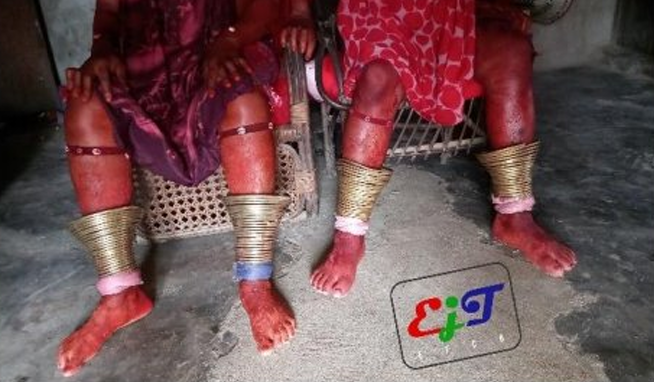
Aguhrd, installed on Abon-okim
Identity Markers: Each ornament carries aesthetic codes tied to lineage and village, making Aguhrd not just decorative but deeply symbolic. The patterns, materials, and styles embedded in these items reflect specific cultural identities, linking the maiden to her ancestral roots and to the community that shaped her. Through these adornments, her body becomes a canvas on which heritage is displayed, allowing others to recognize her origins and affiliations at a glance.
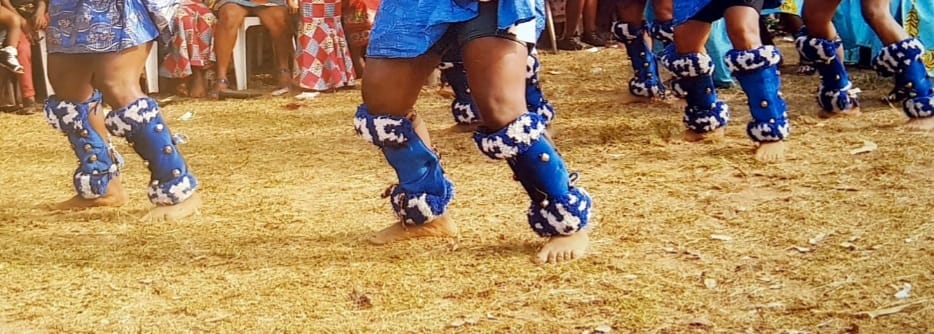
Mgbaritm, installed on Nkim-aguhrd dancers
Social Recognition: The public display of Aguhrd affirms the girl’s successful transition into womanhood. As she appears in communal spaces adorned with these items, the community acknowledges her new status, celebrating her growth and welcoming her into adult responsibilities. This recognition is not merely personal; it reinforces social continuity by marking the passage of one generation into the next.
In this way, adornment becomes a language of cultural belonging, expressing identity, maturity, and communal acceptance through the visual and symbolic power of ornamentation.
8. Mgbe
A secret/open cult amongst the male folk for initiation as a mark of identity into one’s community. It remains an instrument with the chiefs as title holders to direct, coordinate, and control community affairs under native laws and customs.
A Political System: Mgbe functions as a central political system in Ejagham society, providing chiefs with the institutional framework needed to coordinate governance. Through its structured hierarchy, ritual authority, and mechanisms of decision‑making, Mgbe enables leaders to manage communal affairs, resolve disputes, and maintain order. Its political influence is woven into everyday life, ensuring that leadership is grounded in ancestral legitimacy and collective participation.
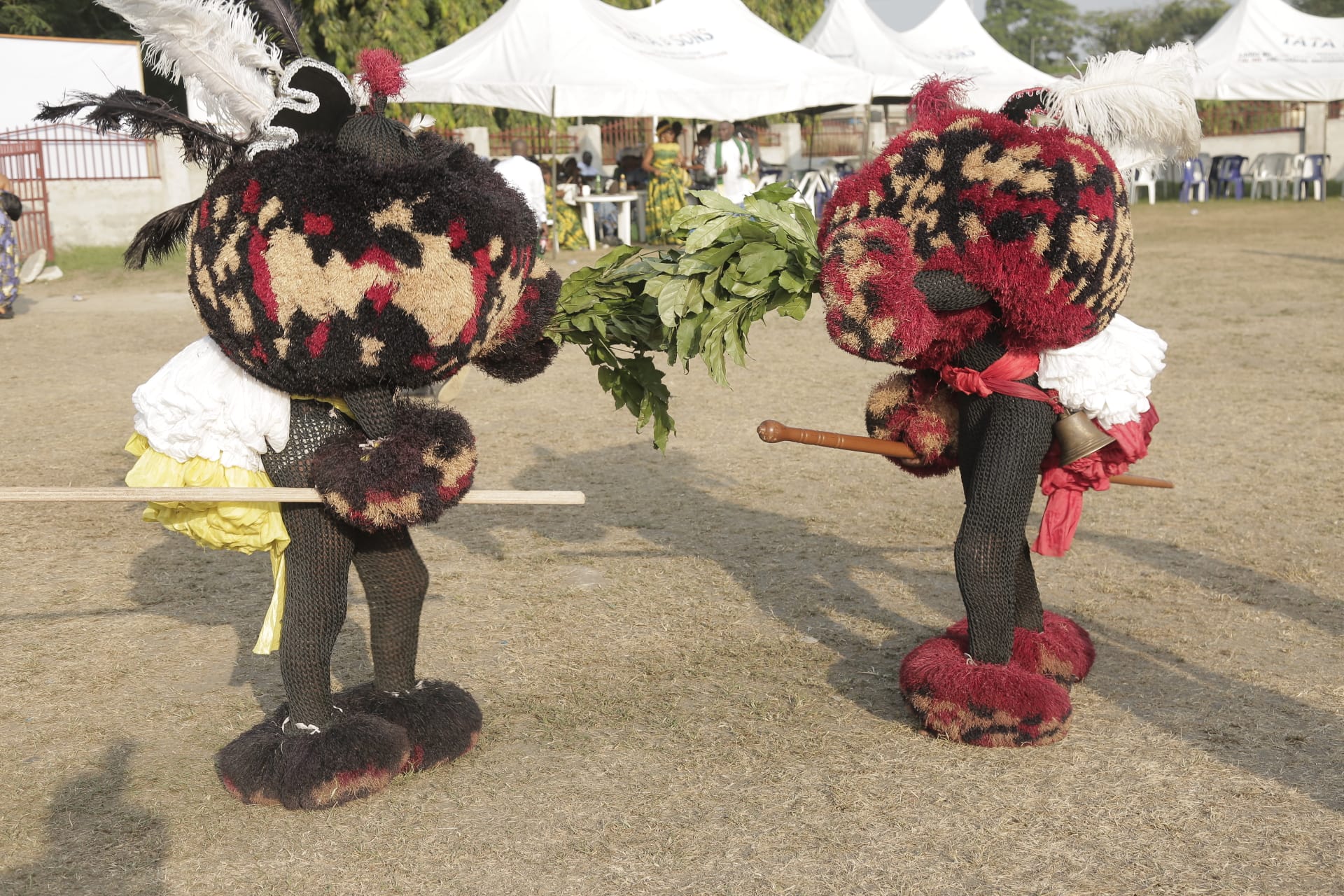
Ogbe Masquerades
A Moral Court: Beyond governance, Mgbe serves as a moral court that enforces native laws and customs. It adjudicates wrongdoing, regulates behavior, and upholds the ethical standards expected within the community. Through ritual sanctions, symbolic judgments, and communal deliberation, Mgbe reinforces social discipline and ensures that cultural norms are respected. Its authority extends into the moral fabric of society, shaping conduct and preserving communal harmony.
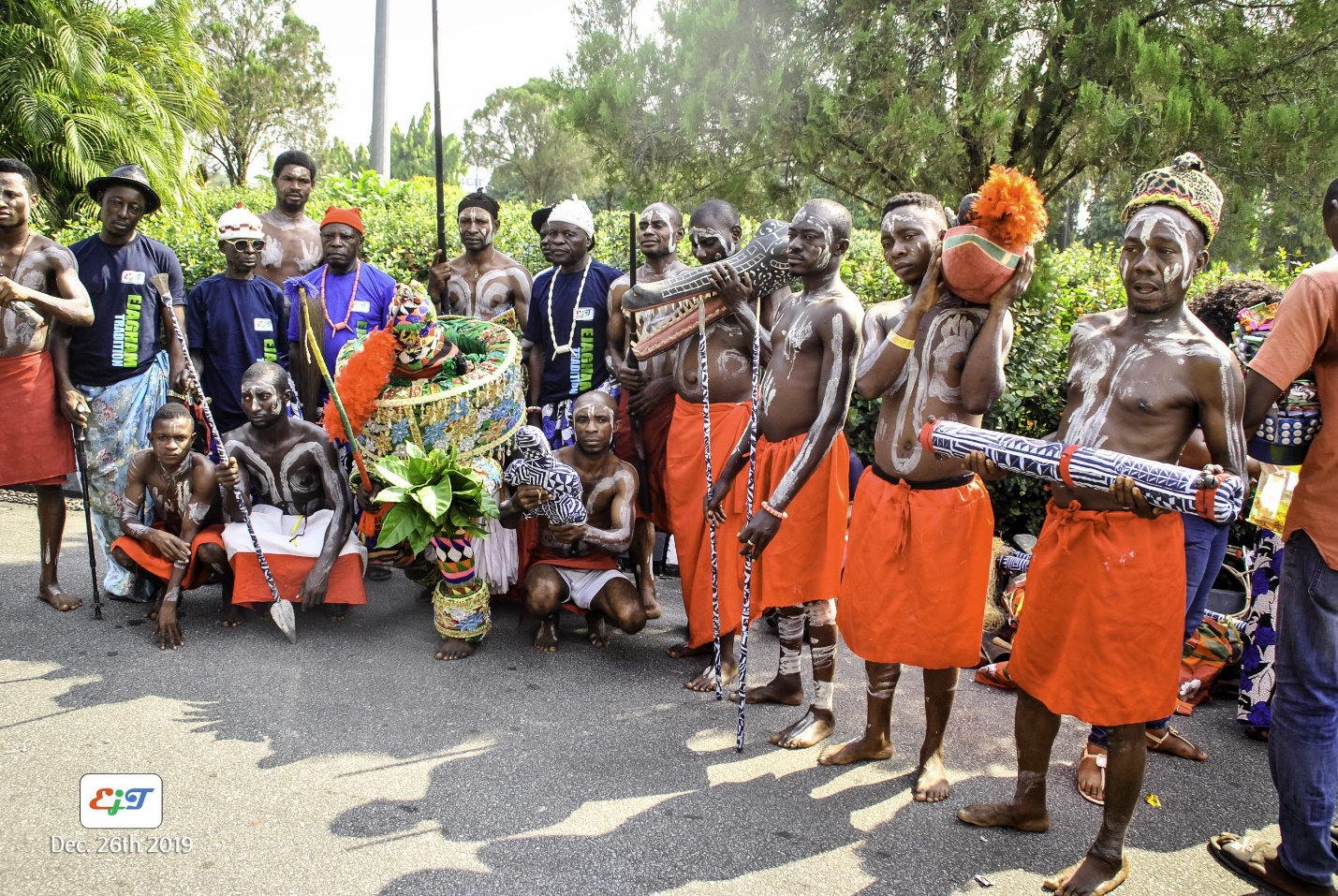
Mgbe Nkanda performance at Calabar Culture Carnival
The Crafting of Cultural Citizens: Initiation into Mgbe marks full membership in the community, transforming individuals from ordinary participants into recognized cultural actors. The initiation process confers identity, status, and belonging, integrating the initiate into the lineage of those entrusted with sacred knowledge and communal responsibility. In this way, Mgbe serves as the institution through which cultural citizenship is conferred, producing socially recognized adults who carry the weight of tradition and communal continuity.
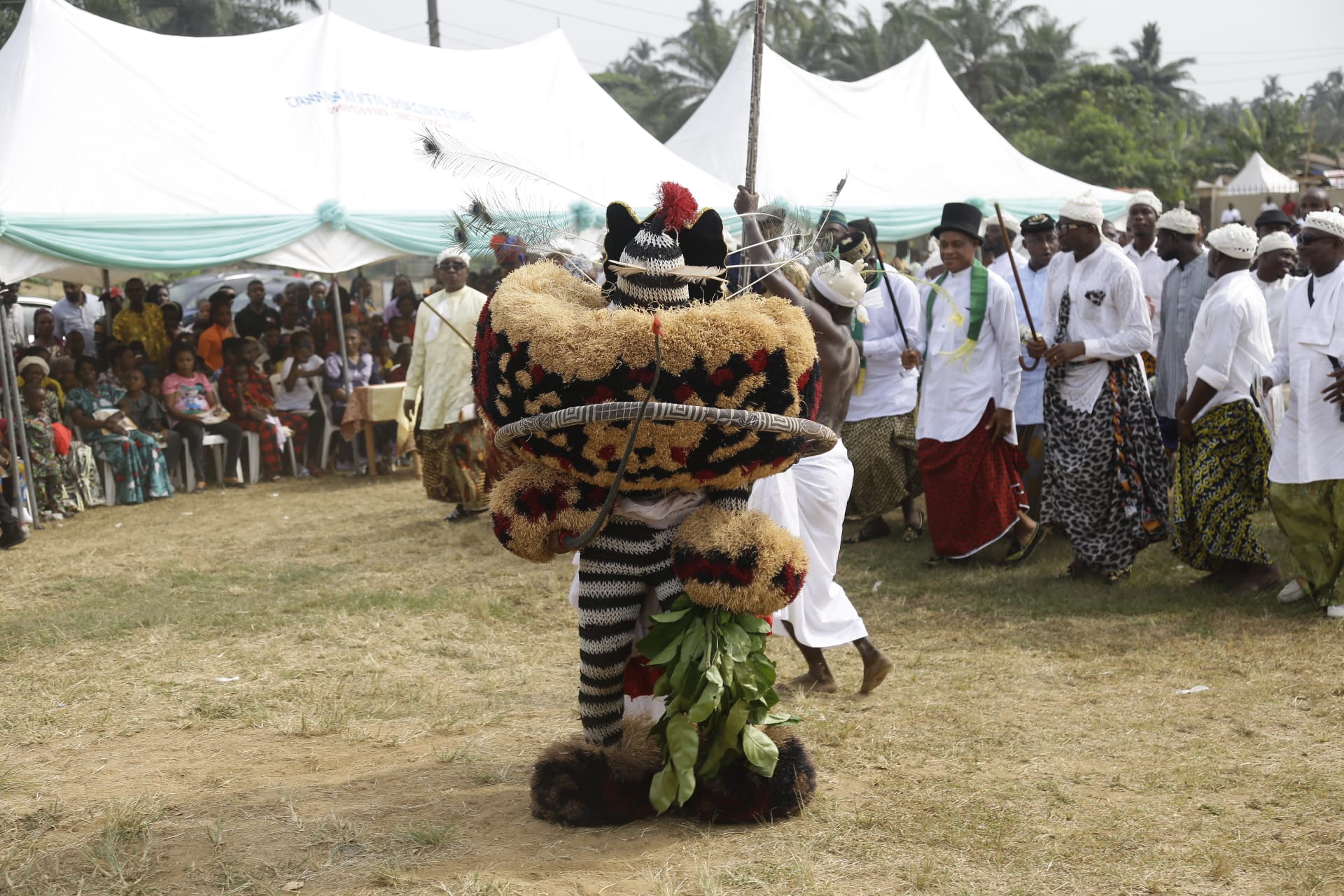
Mgbe Nkanda performance at Ofu Ogan at Calabar
A Knowledge Repository: Mgbe also operates as a repository of cultural knowledge, preserving songs, symbols, histories, and ritual practices that define Ejagham heritage. Within its sacred spaces, knowledge is transmitted orally and performatively (Nsibidi), ensuring that ancestral wisdom is safeguarded and passed down through generations. This intellectual dimension makes Mgbe not only a political and moral institution but also a guardian of cultural memory.
These roles make Mgbe the backbone of Ejagham socio-political organization, anchoring governance, morality, identity, and knowledge within a single, enduring institution.
9. Nchibe
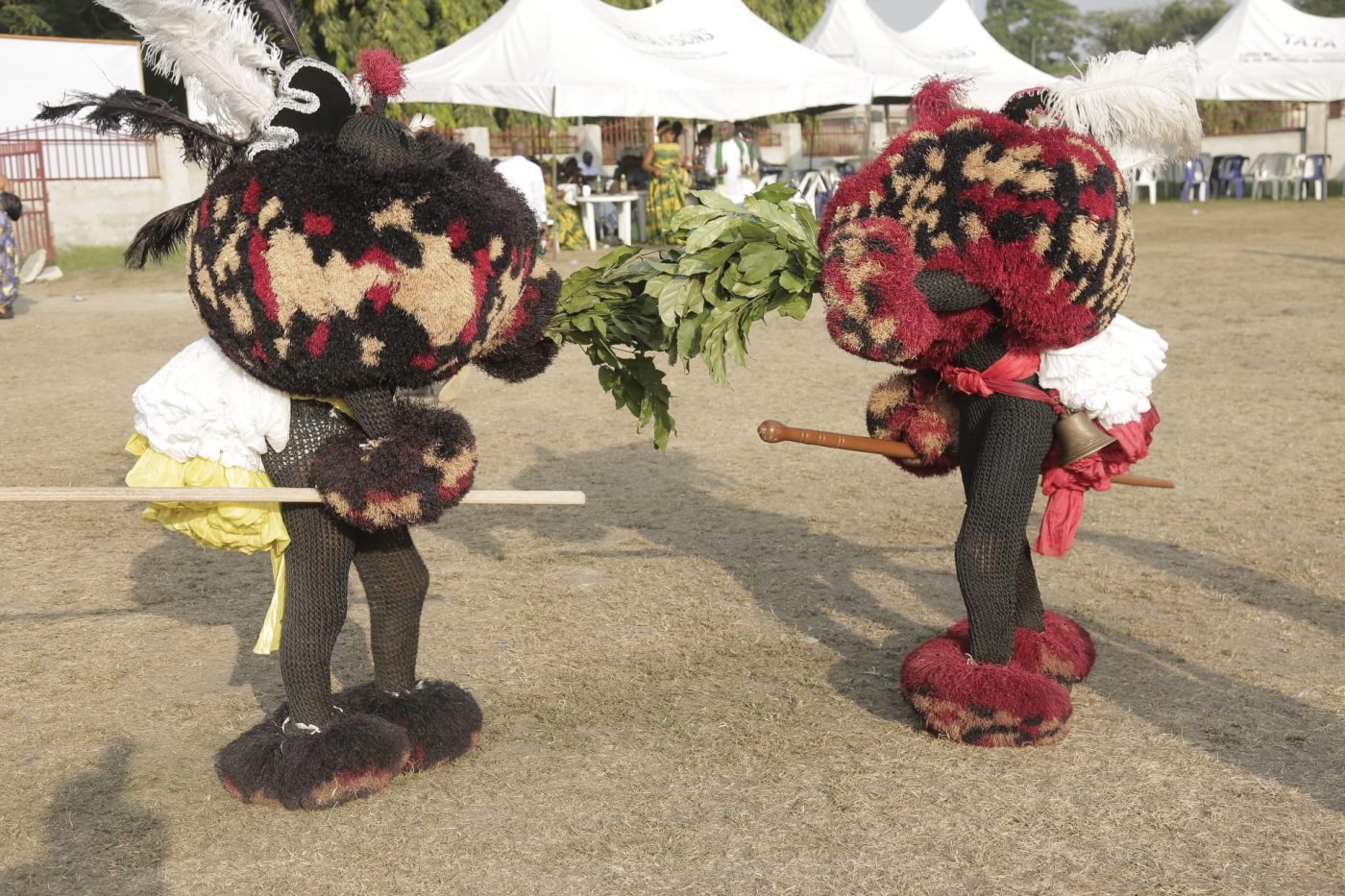
Men’s mask worn as a war dance.
Embodied Courage
Nchibe, the men’s war mask, embodies a powerful expression of courage by transforming the dancer into a spiritual warrior. Once the mask is worn, the performer no longer represents an ordinary individual but becomes an ancestral figure of strength, channeling the protective energies that the community relies upon in moments of danger. Through movement, rhythm, and presence, the dancer enacts bravery in a form that is both physical and metaphysical.
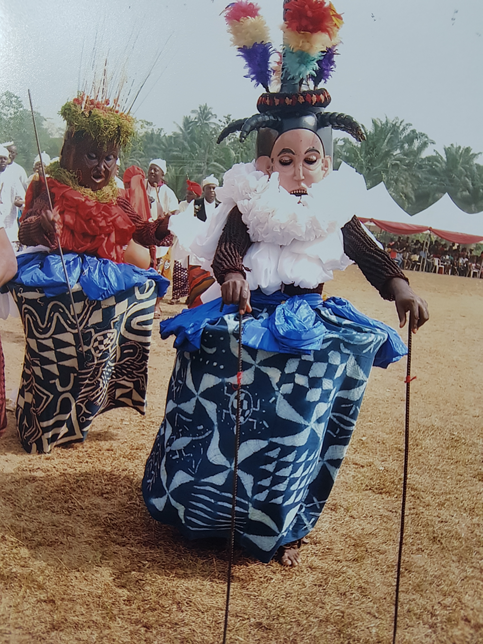
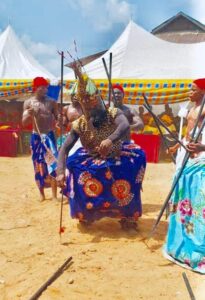
Nchibe performance at Oban Akachack Festival at Oban Town
Collective Defense
The performance of Nchibe also serves as a communal preparation for defense. War dances are not merely artistic displays; they cultivate psychological readiness among both dancers and observers. The ritualized movements rehearse unity, discipline, and alertness, reinforcing the idea that protection is a shared responsibility. In this way, Nchbe becomes a cultural rehearsal for collective resilience.
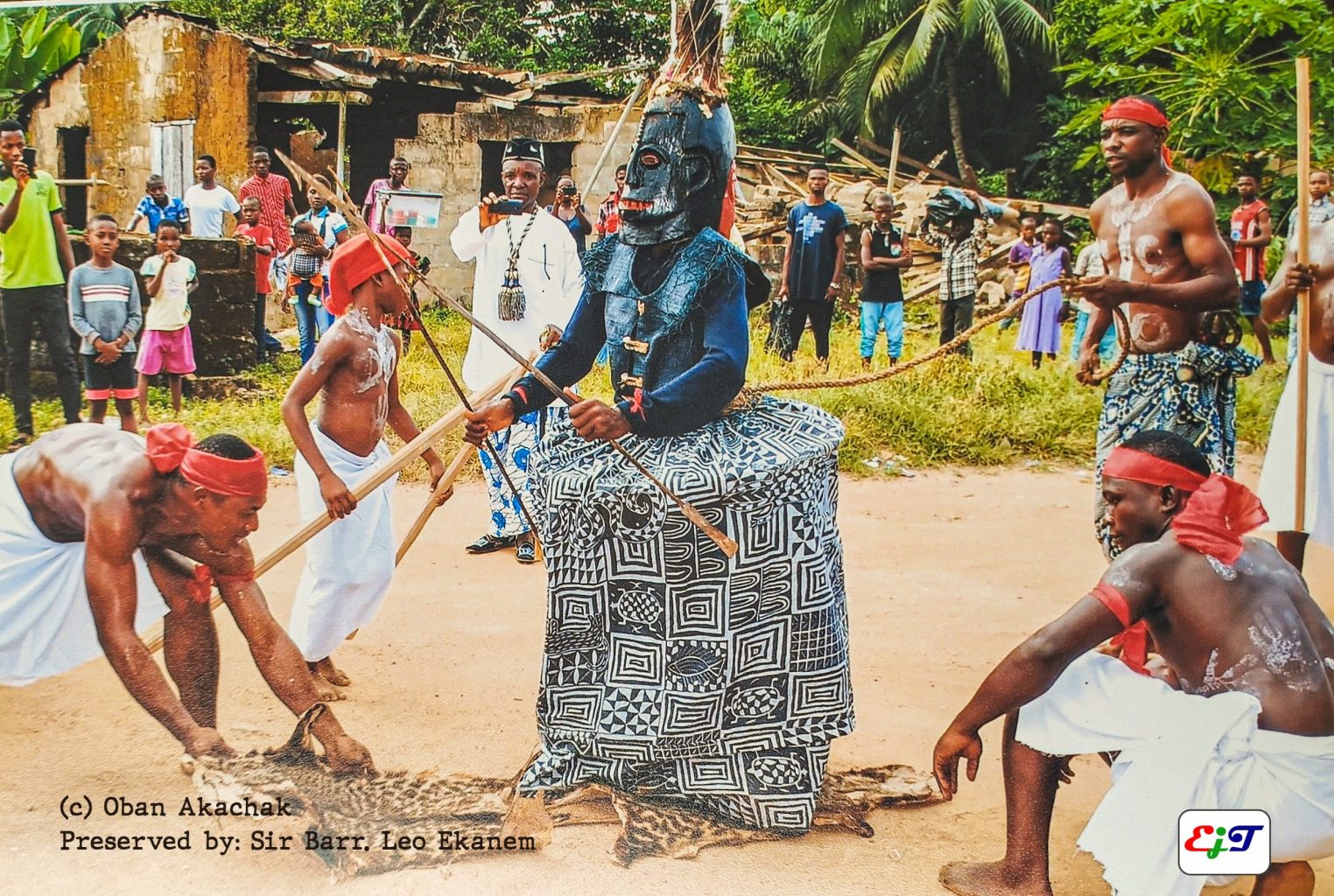
Nchibe performance at Oban Akachack Festival at Oban Town
Symbolic Intimidation
At the same time, the mask functions as a tool of symbolic intimidation. Its dramatic features, amplified by vigorous dance, communicate power and ferocity to potential enemies. The visual impact of Nchibe asserts dominance and warns outsiders of the community’s spiritual and martial strength. Through this symbolic language, the mask becomes an instrument of deterrence.
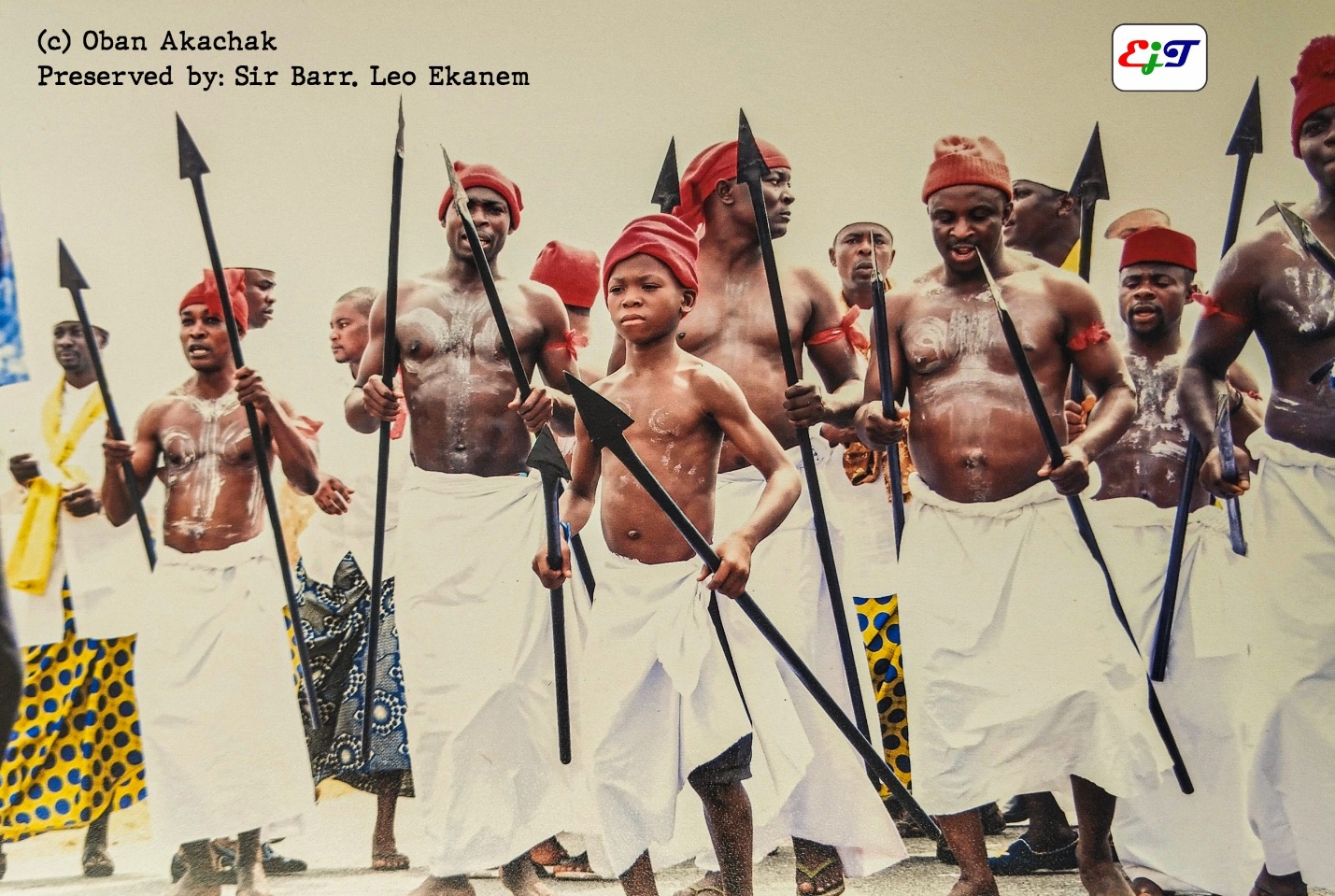
Nchibe performance at Oban Akachack Festival at Oban Town
Taken together, above dimensions reveal Nchibe as a fusion of martial aesthetics and spiritual protection, blending performance, symbolism, and communal identity into a single powerful ritual expression.
10. Ukwa
A war dance to scare enemies.
Performative Warfare
Ukwa operates as a form of performative warfare, where dance becomes a deliberate strategic tool rather than mere artistic expression. Through vigorous movement, forceful gestures, and ritualized choreography, the dancers enact the posture of warriors preparing for confrontation. The performance itself becomes a symbolic battleground, projecting strength and readiness in ways that resonate deeply within the cultural imagination of the Ejagham.
Psychological Dominance
At the heart of Ukwa is the pursuit of psychological dominance. The dance weaponizes fear through rhythm, intensity, and coordinated motion, creating an atmosphere meant to unsettle and intimidate potential enemies. The visual and auditory impact of the performance communicates a message of power and determination, demonstrating that the community is spiritually fortified and mentally prepared for any threat. In this sense, Ukwa functions as a ritualized display of collective resolve.
Group Solidarity
Ukwa also reinforces group solidarity through synchronized movement and shared participation. As dancers move in unison, they embody unity, discipline, and mutual trust—qualities essential for communal defense. The collective rhythm binds participants together, transforming individual bodies into a single coordinated force. This unity strengthens social cohesion and affirms the community’s capacity to act as one in moments of danger.
Above dimensions reveal Ukwa as a powerful example of how Ejagham communities used ritual performance as a form of defense, blending martial symbolism, psychological strategy, and communal unity into a single expressive tradition.
11. Angbu
Night play by youths/elders using a nose‑sounding pipe, gong, and talking drum.
Intergenerational Bonding
Angbu, performed at night with the nose‑pipe, gong, and talking drum, creates a ritual space where youths and elders participate together, strengthening intergenerational bonds. The shared performance allows knowledge, humor, and musical skill to pass fluidly between age groups, ensuring that cultural memory is not confined to elders alone but actively absorbed and re‑interpreted by younger participants. In this way, Angbu becomes a living bridge between generations.
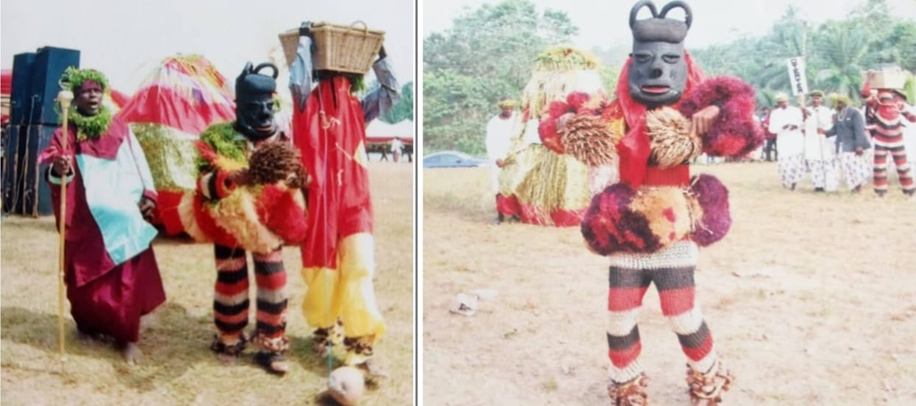
Left picture: Amgbu Efin feature L – R: Angbu Nda, Nju Amgbu, Ikpu Nne and Ekpang Angbu
Musical Innovation
The instruments used in Angbu—especially the talking drum—mimic the tonal patterns of speech, reinforcing the centrality of oral culture in Ejagham society. Through rhythmic dialogue, musical phrases become extensions of spoken language, allowing performers to communicate messages, jokes, and commentary without breaking the flow of the play. This blending of speech and sound demonstrates the community’s creative use of music as a communicative and narrative tool.
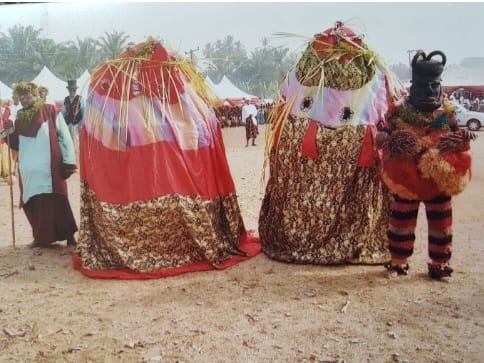
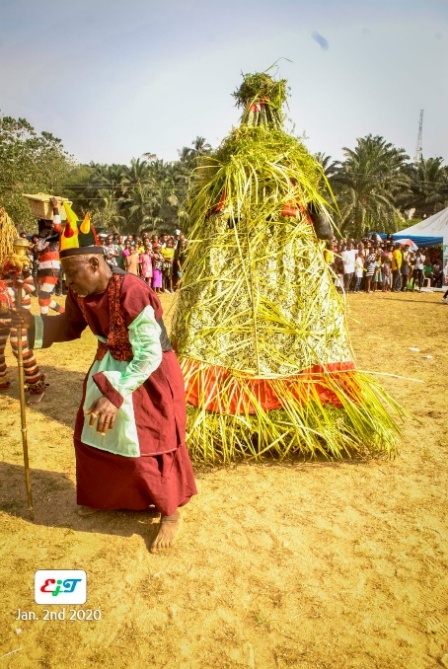
Angbu Efin masquerade at Oban Akachak Festival. Nju Angbu and Angbu Nda at Oban Akackak
Nighttime Creativity
The nighttime setting of Angbu encourages a unique form of creativity. Darkness provides a backdrop for storytelling, humor, and playful improvisation, allowing performers to explore themes and emotions that daylight might constrain. The night becomes a canvas for imaginative expression, where shadows, sound, and communal presence combine to produce a vibrant social theatre.
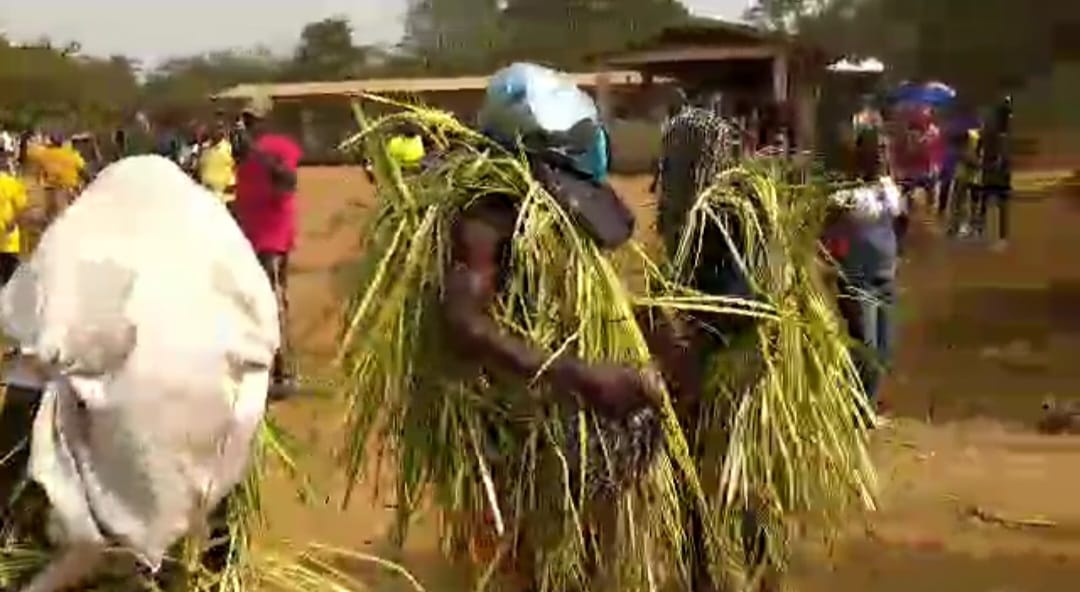
Angbu masquerade at the 2024 Ejagham Njemaya Cultural Festival
Taken together, these dimensions reveal Amgbu as a dynamic cultural performance that strengthens communal ties, blending intergenerational participation, musical ingenuity, and nighttime creativity into a single expressive tradition.
12. Denwa
Localized Identity
Denwa, known especially in Netim, serves as a marker of localized identity within the broader Ejagham cultural landscape. Its performance affirms Netim’s distinct heritage, allowing the community to express a ritual style that is uniquely theirs while still participating in the shared cultural universe of Ejagham tradition. Through Denwa, Netim asserts its presence and preserves the nuances that differentiate it from neighboring groups.
Micro‑Tradition
As a micro‑tradition, Denwa illustrates how smaller communities maintain unique practices within the larger Ejagham world. These localized rituals enrich the cultural fabric by adding layers of variation, demonstrating that Ejagham identity is not monolithic but composed of multiple, interconnected expressions. Denwa embodies this diversity, showing how specific villages cultivate their own ritual signatures while contributing to collective heritage.
These characteristics reveal Denwa as a clear example of intra‑cultural diversity, highlighting the subtle yet meaningful variations that exist within Ejagham society.
13. Okpere
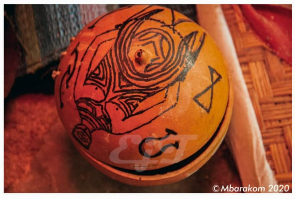
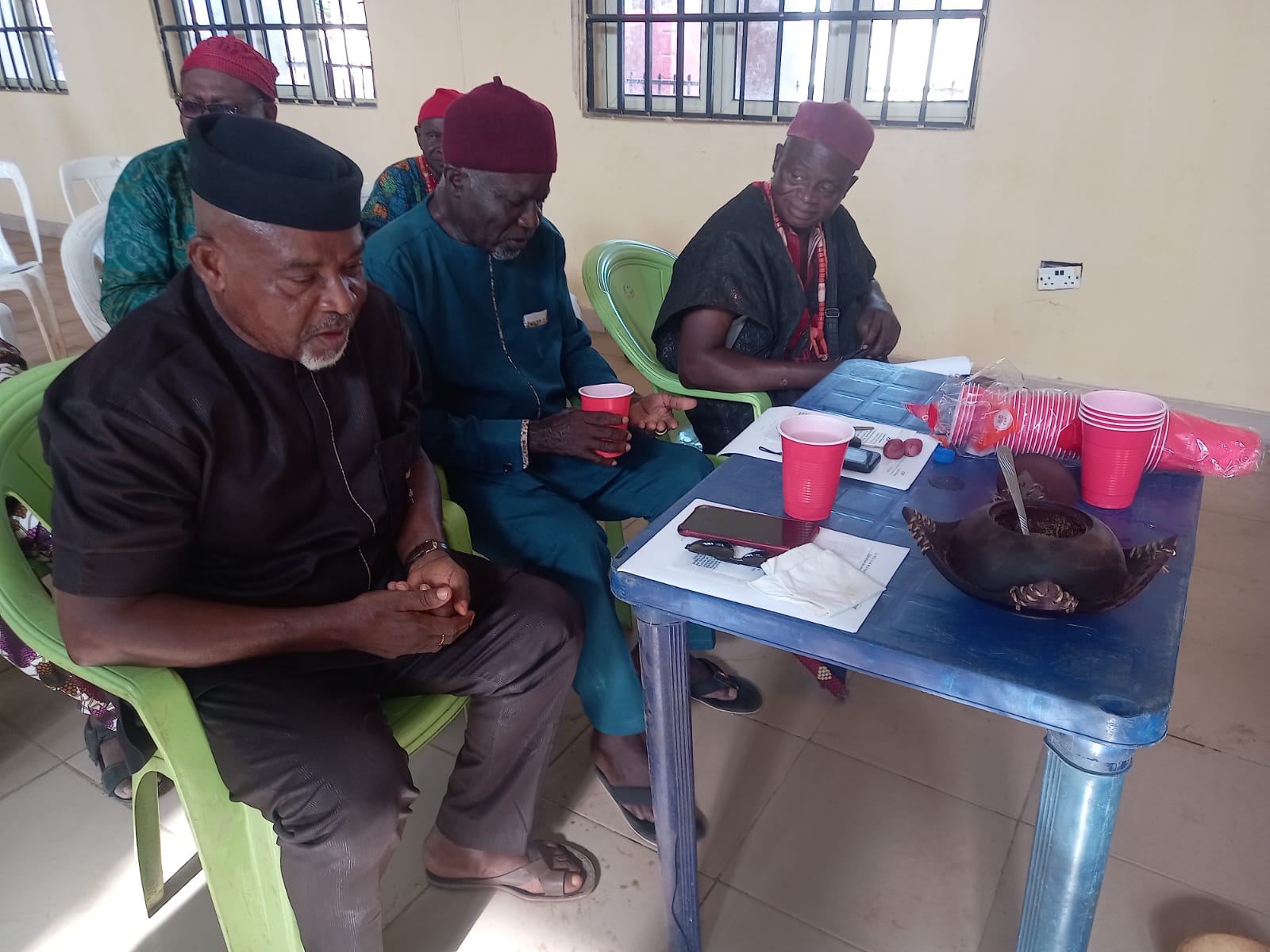
Okpere decorated with Nsibidi signs
Village‑Specific Heritage
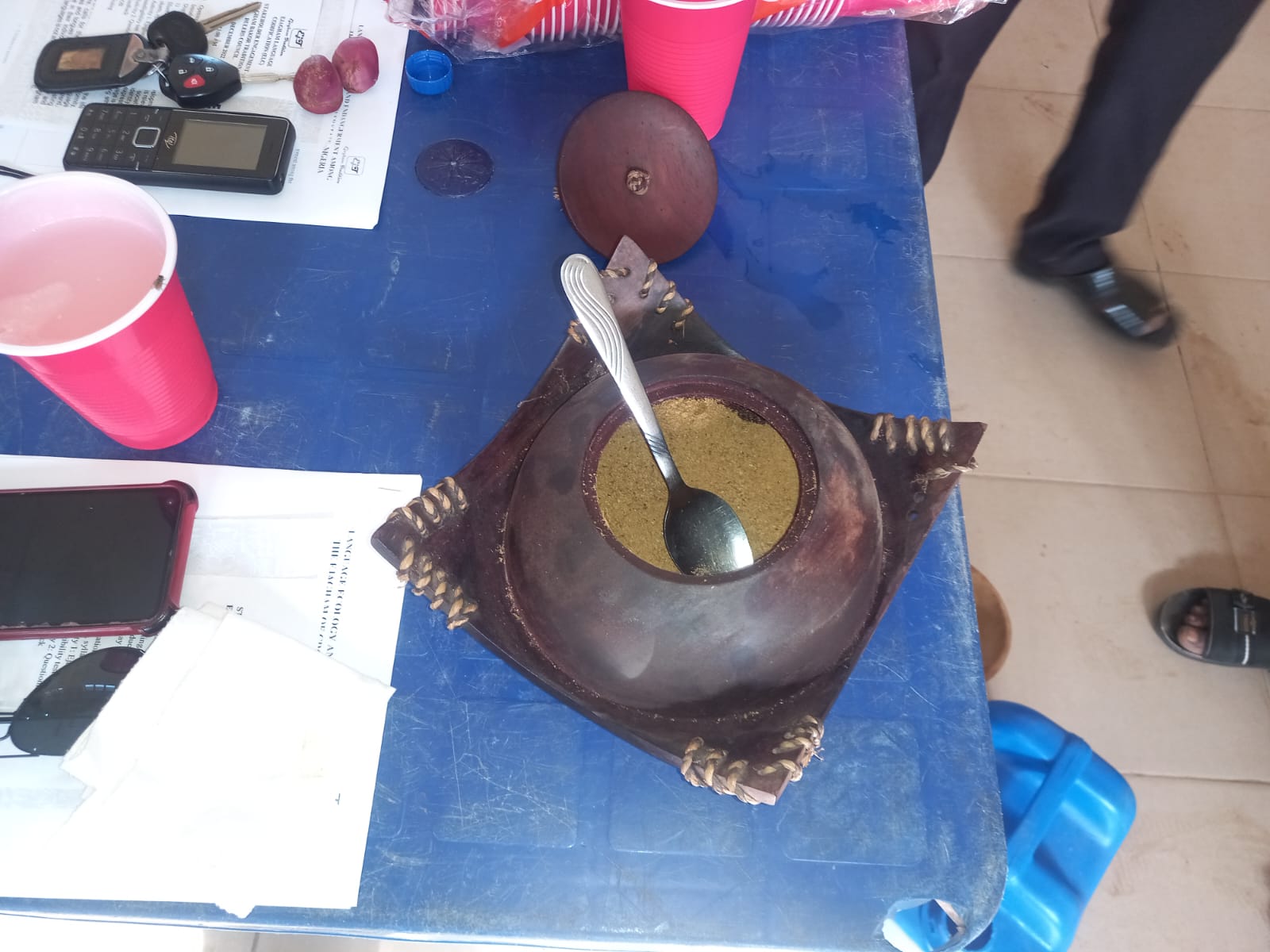
Okpere is a bowl made out of calabash and decorated with Nsibidi signs. The dance, practiced in Mbarakom, reinforces the village’s cultural prestige by highlighting a ritual tradition that is uniquely its own. Its performance affirms Mbarakom’s distinct identity within the wider Ejagham world, marking the community as a custodian of specialized heritage. Through Okpere, the village asserts its cultural presence and preserves the ritual expressions that define its historical character.
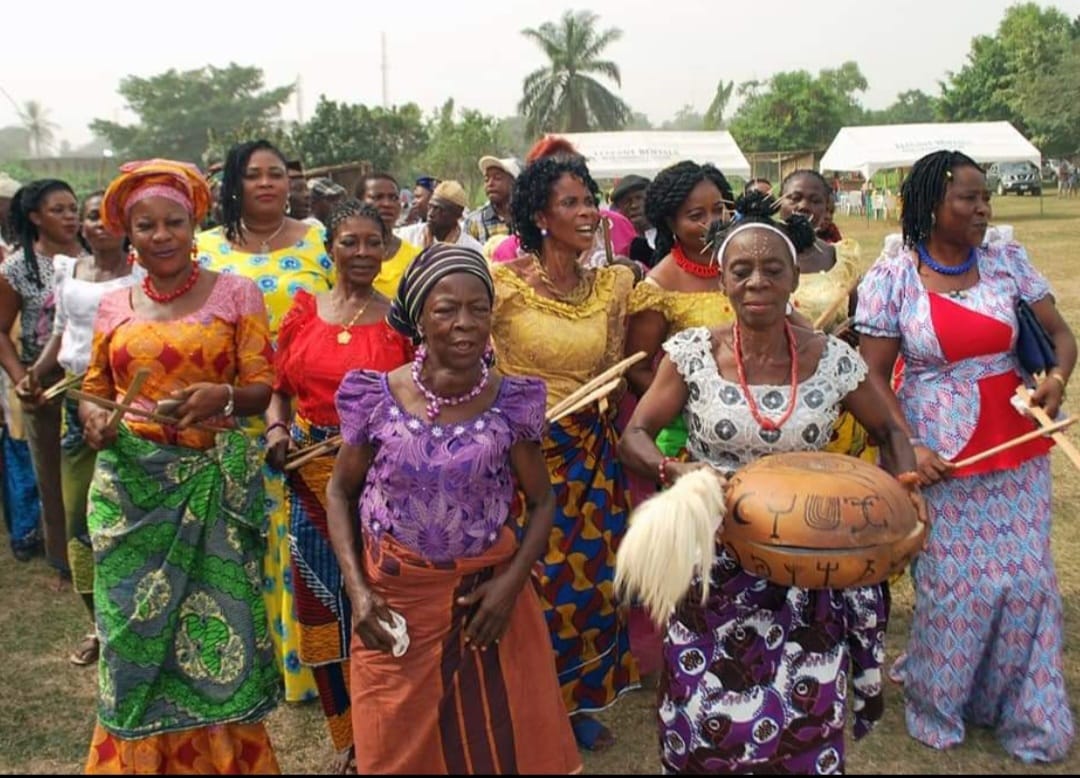
Okpere performance by Mbarakom Community at Oban Akackak Festival
Ritual Specialization
As a dance associated with particular clans, Okpere illustrates the principle of ritual specialization in Ejagham society. Certain performances belong to specific lineages, reflecting how cultural knowledge is distributed, protected, and transmitted within defined social groups. This specialization strengthens clan identity and ensures that ritual expertise remains anchored in ancestral authority.
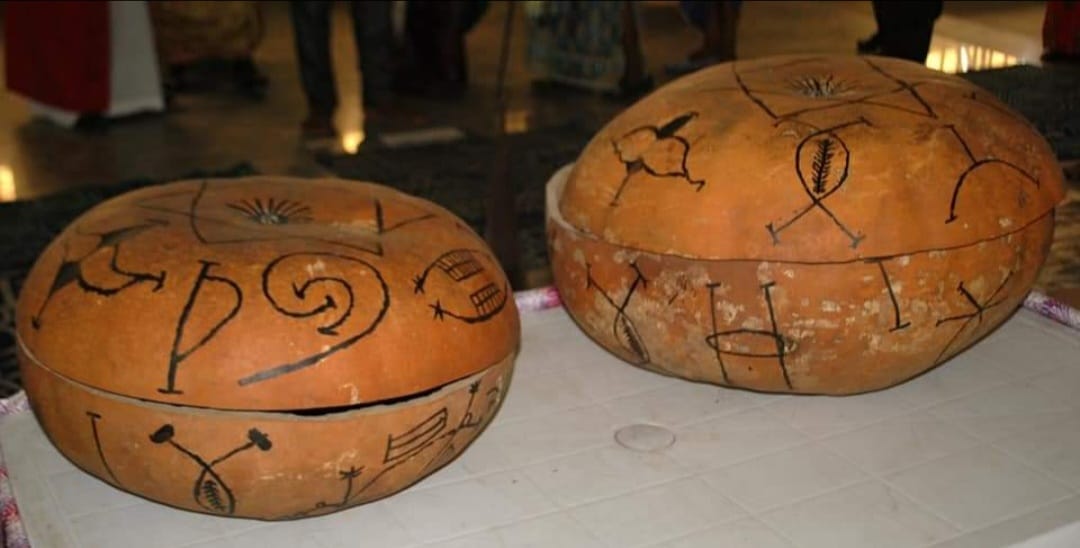
Akpere decorated with Nsibidi signs
Taken together, these expressions reveal Okpere as a territorial marker of tradition, expressing both village pride and the structured distribution of ritual knowledge within Ejagham culture.
14. Ache-Mbang
An evening play amongst native men and women using an ancient palm (Mbang) for a hide‑and‑seek game and circle dance, wanting to know the keeper of the precious nut. When found, it is applauded and taken by another player. It goes with a rousing stanza of music: Tongm Mgbe Mbang eyama owoe (meaning Show me my precious nut: Oh I cry)
Symbolic Economy
Ache‑Mbang, a hide‑and‑seek circle dance centered on a precious nut, unfolds as a symbolic economy in which value, secrecy, and desire are ritualized. The nut becomes more than an object of play; it represents what is treasured, pursued, and protected within the community. Its concealment and revelation mirror social dynamics of trust, competition, and the careful handling of what is culturally esteemed.
Play as Pedagogy
At the same time, Ache‑Mbang operates as a form of pedagogy where play teaches strategy, observation, and social interaction. Participants learn to read subtle cues, anticipate movement, and engage cooperatively or competitively within the circle. Through this playful structure, children and youths absorb social skills that prepare them for more complex communal roles, demonstrating how Ejagham society embeds learning within enjoyable, participatory activities.
Music as Narrative
The musical dimension of Ache‑Mbang adds a narrative layer to the performance. The stanza “Tongm Mgbe Mbang eyama owoe” expresses longing and vulnerability, giving emotional depth to the game and linking it to themes of desire, uncertainty, and human connection. Music becomes a storyteller, guiding the mood of the circle and framing the nut‑hunt within a broader moral and emotional landscape.
The above show how Ache‑Mbang blends play, ritual, and moral storytelling, transforming a simple game into a culturally rich performance that teaches, entertains, and reinforces communal values.
15. Annm
One under special attack by water god/goddess. On relief, she helps others under such conditions through prayers and incantations, and also foreseeing and foretelling.
Spirit Calling
Annm refers to a person believed to have been possessed or seized by water spirits, an affliction that ultimately becomes an initiation. What begins as a frightening encounter is reinterpreted as a spiritual calling, marking the individual as someone chosen by forces beyond the human realm. The ordeal signals that the person has been singled out for a unique destiny within the community’s cosmology.
Shamanic Transformation
Through this ordeal, Annm undergoes a shamanic transformation in which suffering grants spiritual sight. The individual emerges from the experience with heightened sensitivity to the unseen world, able to perceive and interpret spiritual disturbances that others cannot. This transformation is not merely symbolic; it is understood as a realignment of the person’s inner being, preparing them for a life of ritual responsibility.
Community Healing
Following this transformation, Annm becomes a healer whose experiences equip them to serve the community. Their knowledge of water spirits, combined with the spiritual insight gained through suffering, allows them to diagnose afflictions, perform rituals, and offer guidance. In this role, Annm becomes a vital resource, turning personal ordeal into communal benefit.
Taken together, these themes reflect the Ejagham belief that those who are chosen are marked through ordeal, and that suffering can be the pathway to spiritual authority and healing power.
16. Egbe-Eju-Mfam
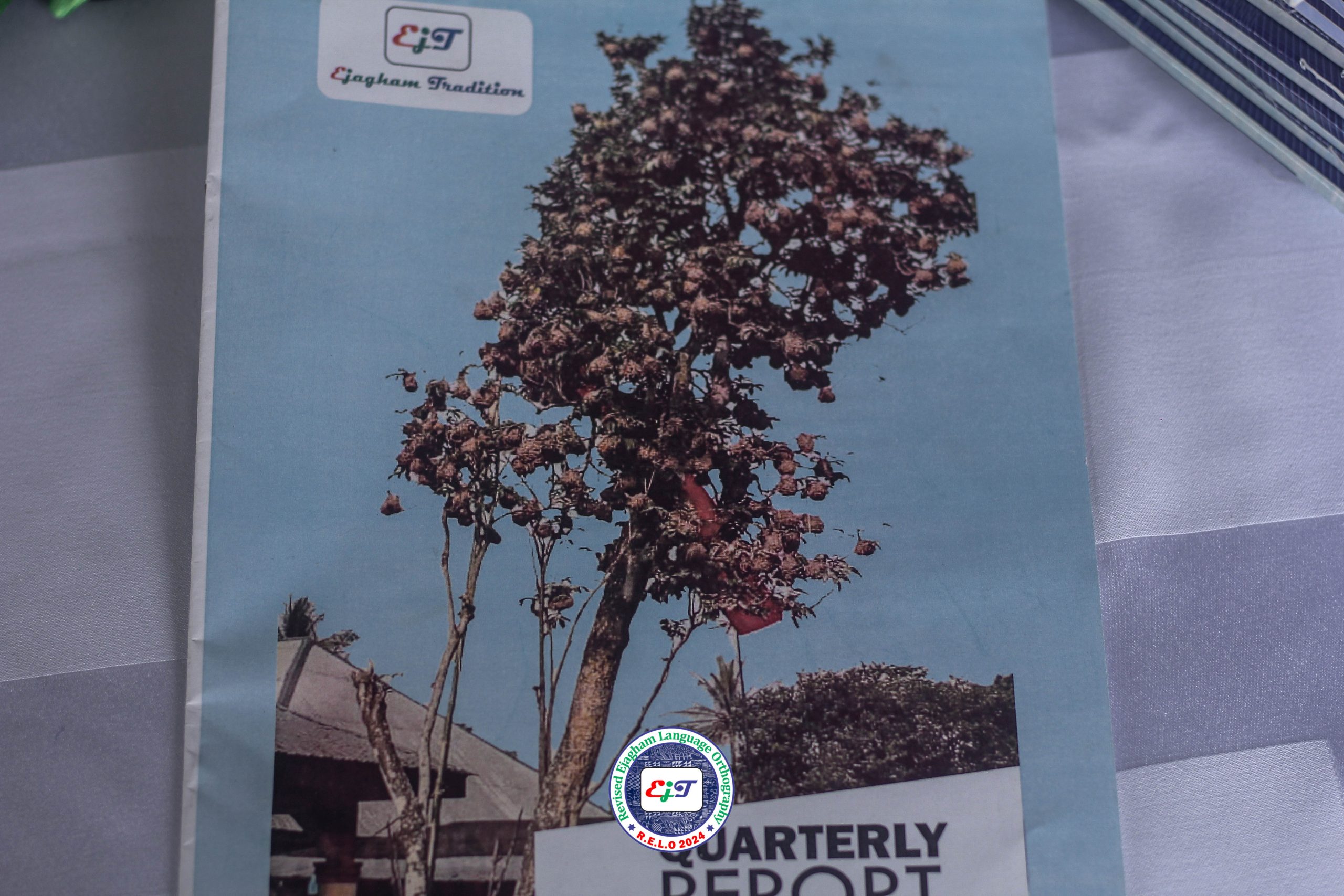
A special tree with special weaver birds in front of the native hall.
Sacred Ecology
Egbe-Eju-Mfam, a special tree standing before the native hall and home to weaver birds, functions as a sacred ecological landmark within Ejagham society. Certain trees are understood not merely as vegetation but as spiritual anchors—living points where nature and ancestral presence converge. The placement of this tree signals its ritual importance, marking it as part of the community’s spiritual geography.
Bird Symbolism
The weaver birds that inhabit Egbe-Eju-Mfam add another layer of meaning. Their constant activity, intricate nests, and communal behavior symbolize industry, cooperation, and continuity. In Ejagham thought, these birds embody the virtues of collective effort and generational renewal, making their presence at the tree both aesthetically striking and symbolically rich.
Spatial Rituality
Positioning Egbe-Eju-Mfam directly before the native hall transforms the space into a sacred civic center. The tree becomes a ritual threshold, marking the hall as a place where governance, tradition, and ancestral authority intersect. Its presence frames the hall not only as an administrative structure but as a spiritually charged environment.
These features reveal Egbe-Eju-Mfam as a living shrine that blends nature and culture, embodying ecological reverence, symbolic meaning, and spatial rituality within Ejagham communal life
17. Ejug
A cylindrical and heavy wooden gong carved from very strong and hard trees called Orhu and Nkuyang (Red/Camp Wood) found in far virgin thick forest. It is believed to have been originally blessed and reserved for special purposes. It is placed in front of the native hall beside the big hanging bell for acknowledging and enforcing special actions. It is beaten with a pair of heavy drumming sticks to raise and improve sound and tone.
Sacred Craftsmanship
Ejug, a heavy wooden gong carved from the revered Orhu and Nkuyang trees, embodies sacred craftsmanship in Ejagham society. Only particular trees are considered ritually suitable for such work, and the selection of Orhu and Nkuyang reflects deep ecological knowledge and spiritual discernment. The gong’s very material carries ancestral significance, linking its sound to the sacred landscape from which it was shaped.
Sound as Authority
The resonant tone of Ejug functions as a sonic expression of authority. Its deep, commanding sound draws attention, signals order, and communicates the presence of leadership. Whether summoning elders, marking important announcements, or initiating ritual activity, the gong’s voice serves as an auditory emblem of governance and communal discipline.
Temporal Markers
Ejug also acts as a temporal marker, structuring communal time during vigils, coronations, and celebrations of victory. Its rhythmic strikes punctuate significant moments, guiding the community through transitions, ceremonies, and collective experiences. In this role, the gong becomes a keeper of ritual time, marking events that define social and political life.
Spatial Symbolism
Placed at the entrance of the native hall, Ejug serves as a guardian of space. Its position signals that one is entering a zone of civic and spiritual importance. The gong stands as both a threshold and a sentinel, reinforcing the hall’s status as the center of governance, ritual deliberation, and ancestral presence.
Considered collectively, these themes reveal Ejug as a sonic emblem of Ejagham governance and spirituality, blending sacred materiality, authoritative sound, ritual timing, and spatial symbolism into a single powerful cultural instrument.
18. Efhuni
A special spring water with appeasing and cooling effect in special land sacrifices.
Water Cosmology
Efhuni, a special spring whose water is used in land sacrifices, embodies the Ejagham understanding of water as a cosmological portal. Springs are regarded not simply as natural features but as openings to ancestral realms, places where the living can communicate with forces that govern fertility, land, and communal well‑being. Drawing water from Efhuni is therefore an act of entering a sacred threshold, engaging directly with the spiritual landscape beneath the physical world.
Appeasement Rituals
Within ritual practice, Efhuni’s cooling water is used to calm spiritual disturbances and restore harmony. Its application in sacrifices reflects the belief that water carries the power to soothe, reconcile, and rebalance relationships between humans, ancestors, and territorial spirits. By pouring or sprinkling this sacred water, practitioners symbolically cool tensions, cleanse impurities, and invite peace back into the land.
Environmental Ethics
Efhuni also reinforces an environmental ethic rooted in reverence for sacred springs. Because such waters are spiritually significant, they are protected, respected, and carefully maintained. This cultural value encourages conservation, ensuring that the spring remains pure for ritual use and continues to sustain both ecological and spiritual life. In this way, environmental stewardship becomes intertwined with religious duty.
In their totality, these components show that Efhuni embodies the spiritual ecology of Ejagham land, blending cosmology, ritual healing, and environmental care into a single sacred source.
19. Mbui Nkuk,
Special funeral goat.
Sacrificial Economy
Mbui Nkuk, the special funeral goat, occupies a central place in Ejagham mortuary rites by functioning within a sacrificial economy where animals mediate between the living and the dead. The goat becomes a ritual offering that carries messages, gratitude, and appeasement across the boundary separating the human world from the ancestral realm. Its sacrifice symbolizes the community’s commitment to honoring the deceased and maintaining harmony with ancestral forces.
Ancestral Appeasement
In this context, Mbui Nkuk plays a crucial role in ensuring the peaceful transition of the departed. The offering is meant to calm ancestral spirits, guide the deceased safely into the ancestral fold, and prevent spiritual disturbances that might arise from an unsettled passage. Through this ritual act, the community reaffirms its relationship with the ancestors, acknowledging their ongoing influence over land, lineage, and wellbeing.
Communal Feasting
The ritual also culminates in communal feasting, where the shared consumption of the goat strengthens social bonds during mourning. Eating together transforms grief into collective solidarity, allowing family and community members to reaffirm unity at a moment of vulnerability. The feast becomes both a memorial act and a reaffirmation of communal continuity.
Taken together, these aspects show that Mbui Nkuk is central to Ejagham mortuary rites, blending sacrifice, ancestral diplomacy, and communal cohesion into a single ritual expression.
20. Nyam Ebhui
Special funeral meat to appease the dead. (And others still in oral making)
Food as Communication
Nyam Ebhui, the special funeral meat offered during burial rites, functions as a form of communication between the living and the dead. In Ejagham cosmology, food is not merely sustenance but a medium through which messages, respect, and appeasement are conveyed to ancestors. By preparing and dedicating this meat, the community signals its continued recognition of the deceased and its desire to maintain harmony with the ancestral realm.
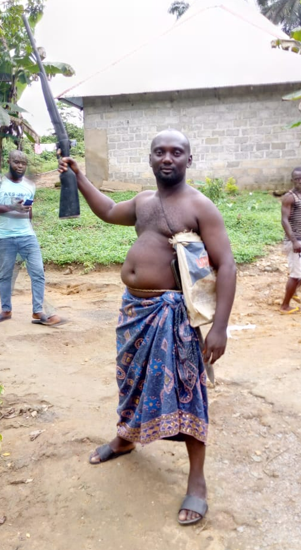
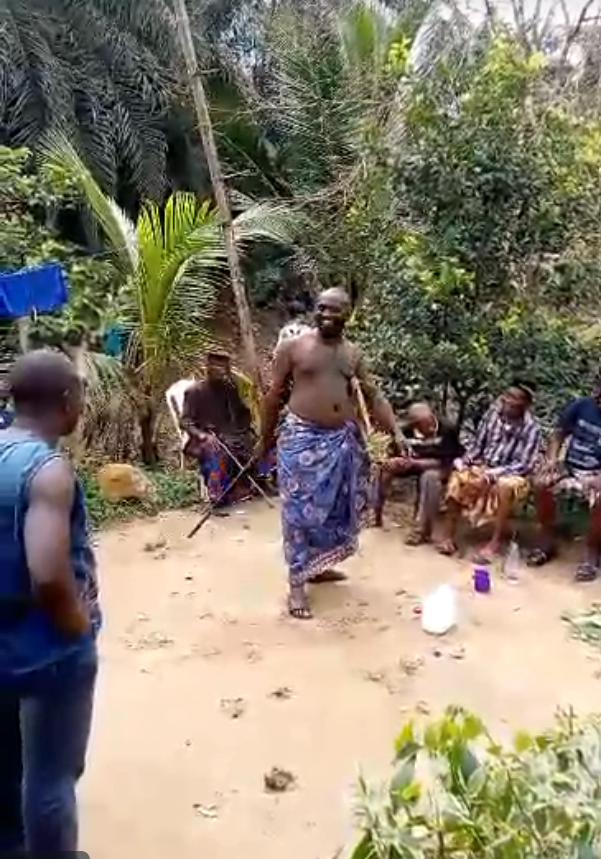
Nta Cyprian Ntui from Ayaebam perform Nyam Ebhui rites
Symbolic Nourishment
The offering also serves as symbolic nourishment, ensuring that the dead are fed so they do not trouble the living. Providing Nyam Ebhui expresses care for the departed and prevents spiritual hunger, which is believed to manifest as disturbances, illness, or misfortune among the living. Feeding the dead thus becomes an act of protection, reinforcing the idea that ancestral wellbeing directly influences communal stability.
Continuity of Lineage
Through this ritual, the community affirms the continuity of lineage and the enduring relationship between generations. Nyam Ebhui reinforces the belief that death does not sever social obligations; rather, it transforms them. The living remain responsible for honouring, appeasing, and sustaining their ancestors, who in turn safeguard the land, lineage, and future descendants.
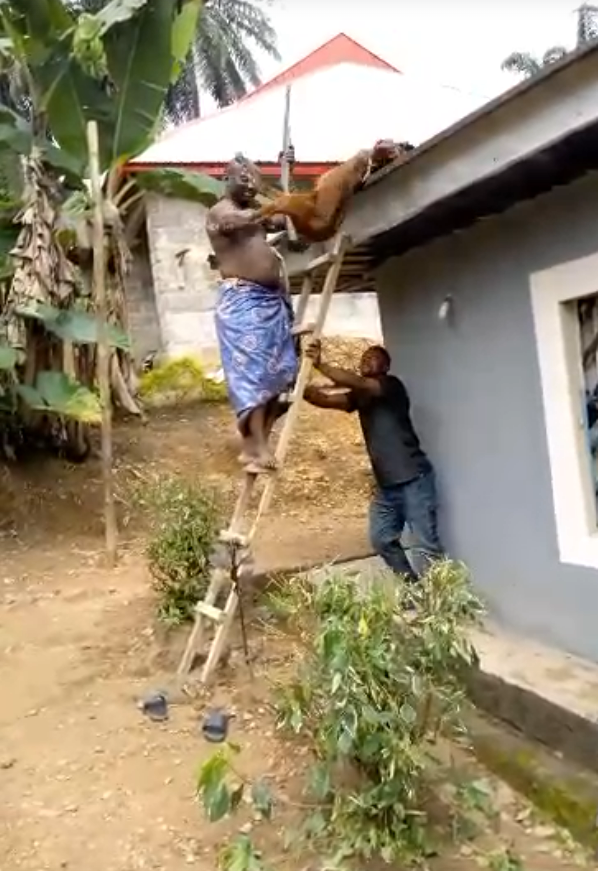
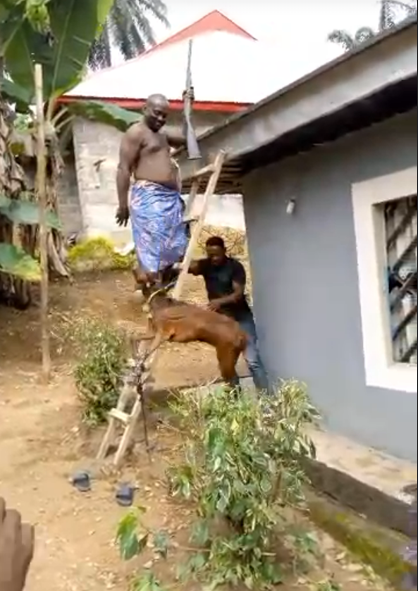
Nta Cyprian Ntui from Ayaebam perform Nyam Ebhui rites
Taken together, these elements show that Nyam Ebhui reflects the Ejagham belief that death does not end social obligations, but instead deepens the reciprocal bond between the living and the ancestral world.
Ekup na nkad
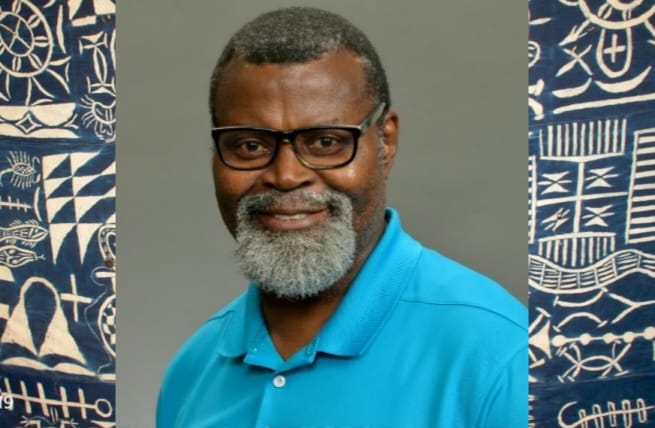
Ntufam Engr. Chris Anom CEng, CMarEng, FIMarEST, FRINA
President, EjT