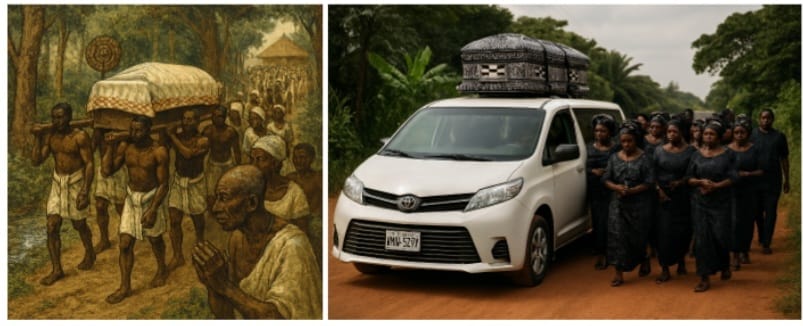

Contemporary Challenges and the Call for Preservation
The Ekpaeku ritual, like many indigenous practices across Africa, now stands at a delicate crossroads. While its spiritual essence remains intact, the world around it has changed dramatically. Migration, the spread of motorable roads, globalization, urbanization, and rapid technological advancement have reshaped the social and cultural landscape of Ejagham communities. These forces have altered not only where Ejagham people live and die, but also how their traditions are enacted, transmitted, and understood.
In earlier generations, Ekpaeku was a strictly land‑based ritual. The symbolic body of the deceased travelled through forests, across streams, and along ancestral footpaths. Each village boundary required formal protocols. Each stop carried spiritual significance. The journey itself was a ritual, slow, deliberate, and deeply communal.
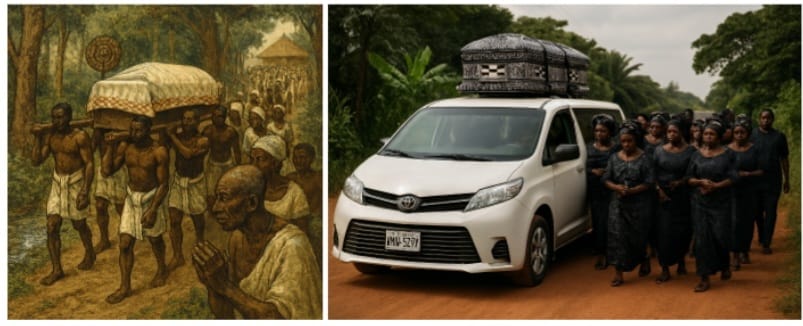
Today, however, the Ekpaeku may be transported by road from distant cities, regional centres, or even from abroad. Vehicles now traverse paths that once required days of walking. Families scattered across continents can coordinate the ritual through mobile communication. The physical journey has changed, but the spiritual logic remains the same: the deceased must return home.
This evolution reflects the adaptability of Ejagham culture. Yet it also reveals the pressures placed upon traditions in a rapidly changing world.
The EDAME Effect: A Framework for Cultural Decline
Community members increasingly observe that Ejagham heritage has suffered from what, at EjT, is now described as the EDAME effect, a five‑fold pattern of cultural decline:
Ejagham people are growing ever more aware that their heritage is still being reshaped, and in many respects weakened, by what EjT now identifies as the EDAME effect, a five‑fold pattern of cultural decline whose consequences continue to unfold
- Erosion – the gradual weakening of traditional knowledge as elders pass away without fully transmitting their wisdom.
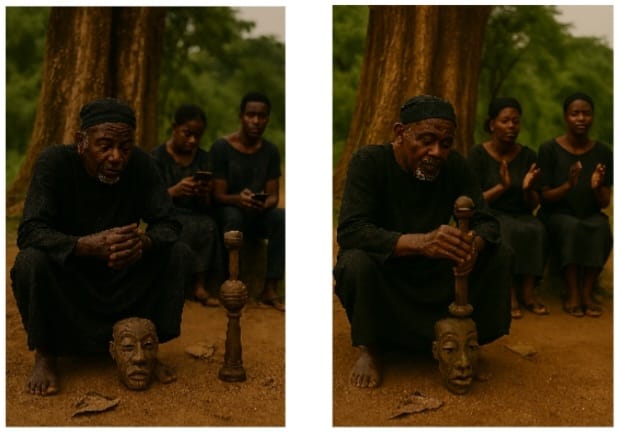
- Dilution – the simplification or shortening of rituals to fit modern schedules, lifestyles, or logistical constraints.
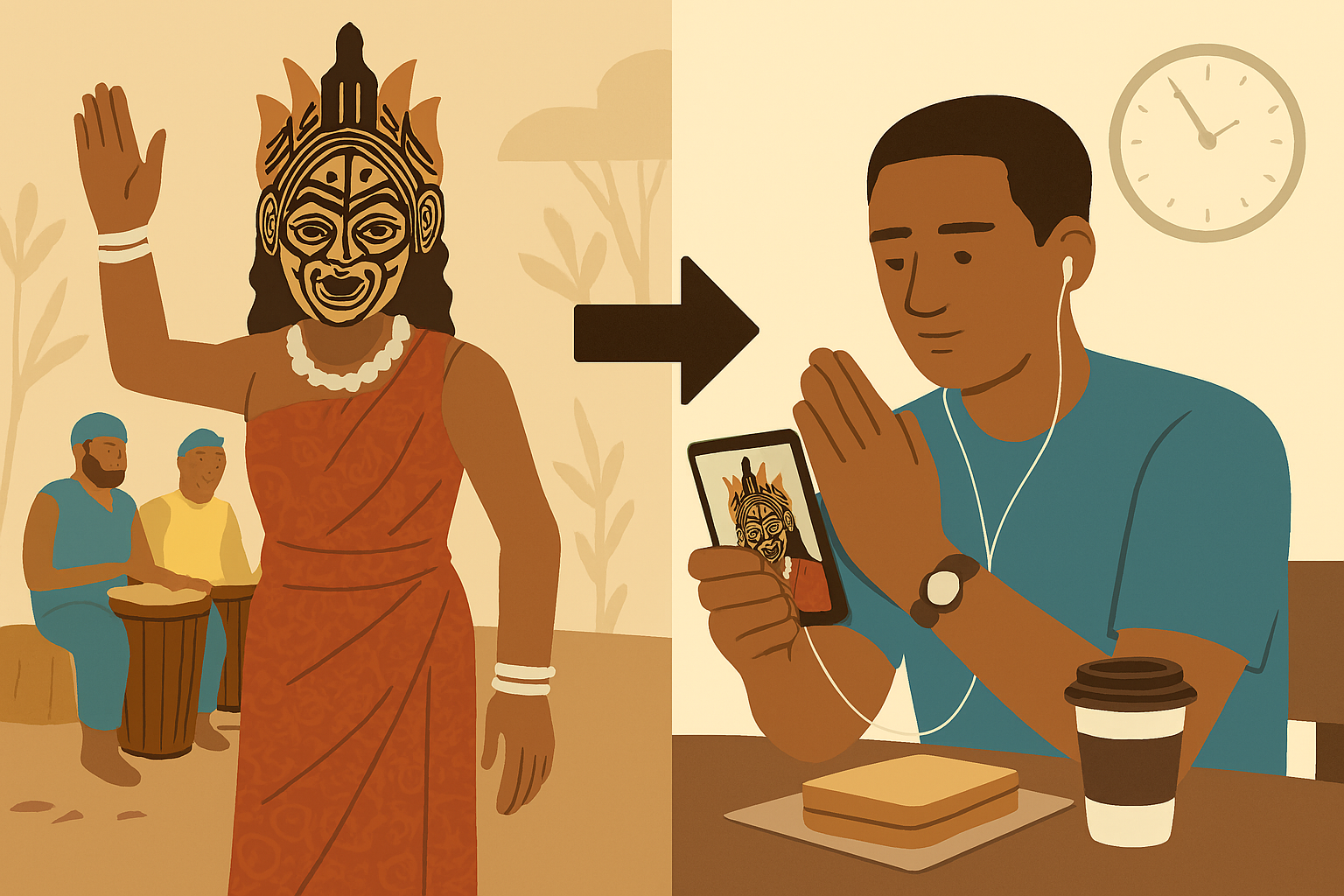
- Adulteration – the introduction of non‑traditional elements, sometimes unintentionally, that distort the original meaning of the ritual.
- Misinterpretation – the rise of misunderstandings, especially among younger generations who have not witnessed full traditional rites.
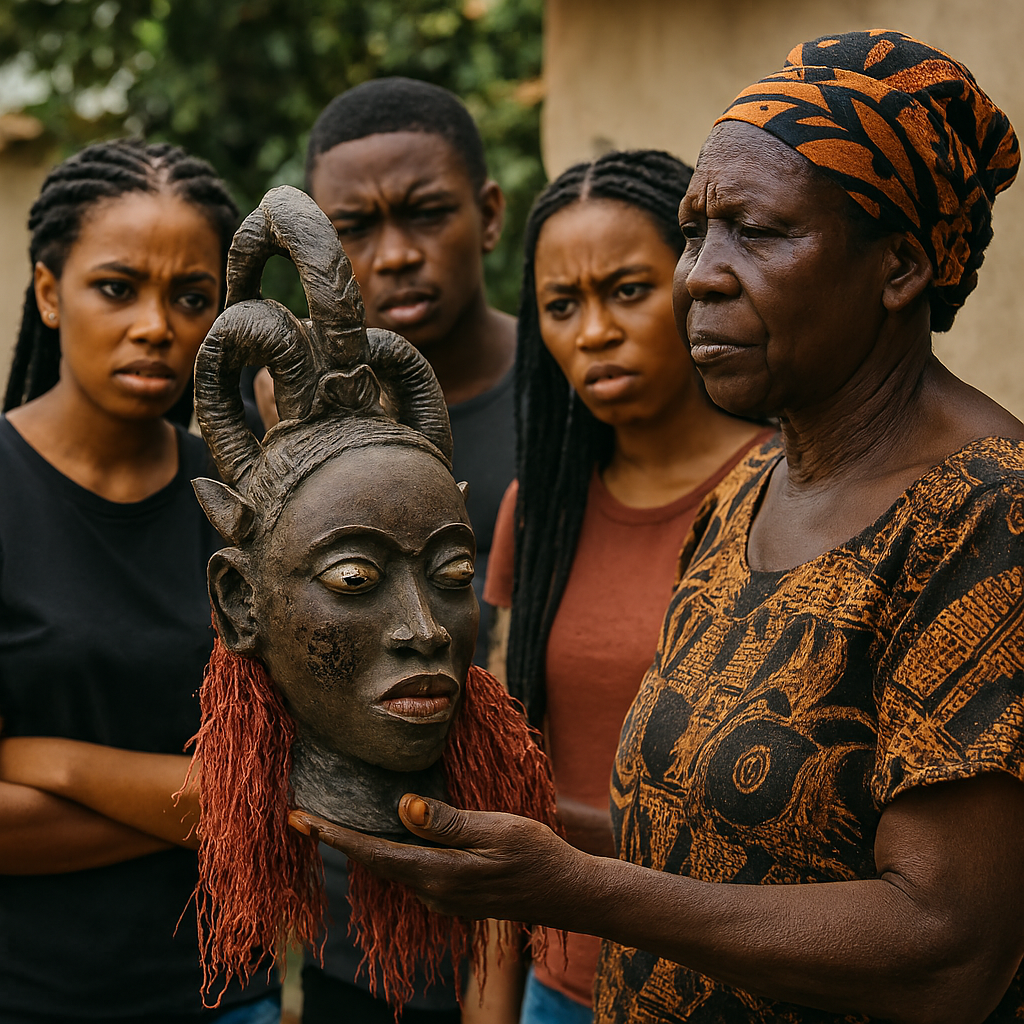
- Extinction – the complete disappearance of certain songs, protocols, or ritual steps in some communities.
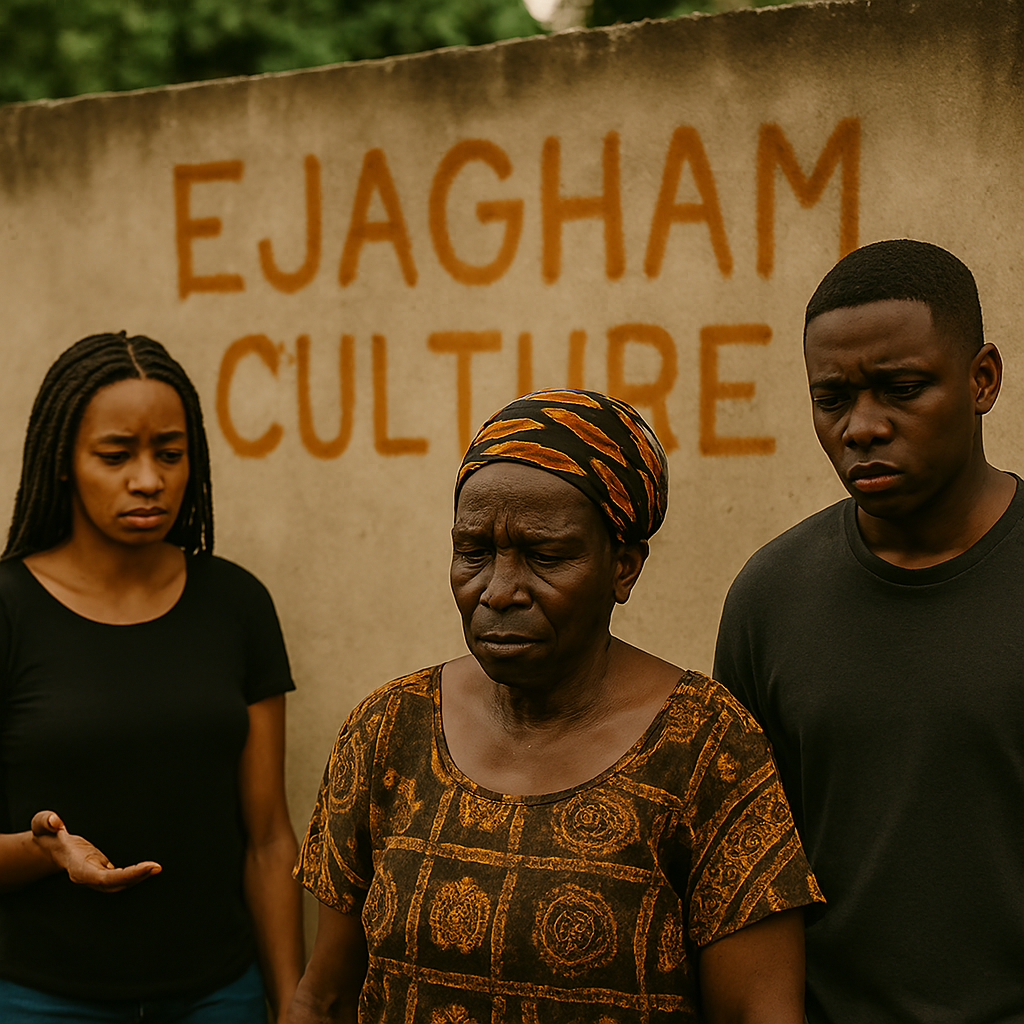
The EDAME effect is not a theoretical construct; it is a measurable and ongoing driver of cultural erosion within Ejagham communities. Its impact is evident in the fading of ritual songs, the disappearance of specialised custodial roles, the breakdown of inter‑village protocols, and the increasing number of Ejagham youths who have never witnessed a full Ekpaeku or comparable ceremonial processions.
While knowledge is often described as power, its value lies in deliberate application. At EjT, we maintain that a clear understanding of the EDAME effect provides a strategic foundation for mitigating its consequences. By recognising its patterns and pressures, we are better positioned to design responsive policies, strengthen cultural transmission systems, and advance the long‑term resilience of Ejagham heritage.
Modernity as Both Challenge and Opportunity
Despite these challenges, modernity has also created new possibilities. The ability to transport Ekpaeku by road ensures that Ejagham sons and daughters who die far from home, whether in major cities, other regions, or foreign countries, can still be symbolically reunited with their ancestors. Digital communication allows families to coordinate rituals across distances that would once have made such rites impossible. In this sense, modernity has not only challenged tradition; it has also expanded the reach of ancestral belonging.
The task before the Ejagham community is not to reject modernity, but to balance adaptation with preservation. The core principles of Ekpaeku – return, remembrance, ancestral continuity, and communal responsibility, remain unchanged. What is needed now is intentional documentation, teaching, and revitalization to ensure that the ritual retains its integrity even as its form evolves.
The Call for Preservation
The Ekpaeku ritual remains one of the most enduring expressions of Ejagham identity, a living testament to a people who have carried their ancestral obligations across generations and geographies. Its survival in the face of the EDAME effect demonstrates a profound truth: cultural traditions do not endure by resisting change, but by engaging with it, adapting thoughtfully while preserving their spiritual core.
Safeguarding Ekpaeku is therefore more than an act of remembrance. It is an assertion of cultural sovereignty and a collective commitment to ensuring that:
- Ejagham identity remains protected and visible.
- Ancestral knowledge continues to be transmitted with fidelity and dignity.
- Rituals that bind the living and the departed are never allowed to diminish or disappear.
In today’s rapidly evolving world, Ekpaeku retains its central purpose: reuniting Ejagham sons and daughters with their ancestral home, regardless of where life’s journeys have taken them. Modernity, through mobility, communication technologies, and global interconnectedness, has expanded the ritual’s reach, enabling families dispersed across continents to participate, coordinate, and uphold this sacred obligation.
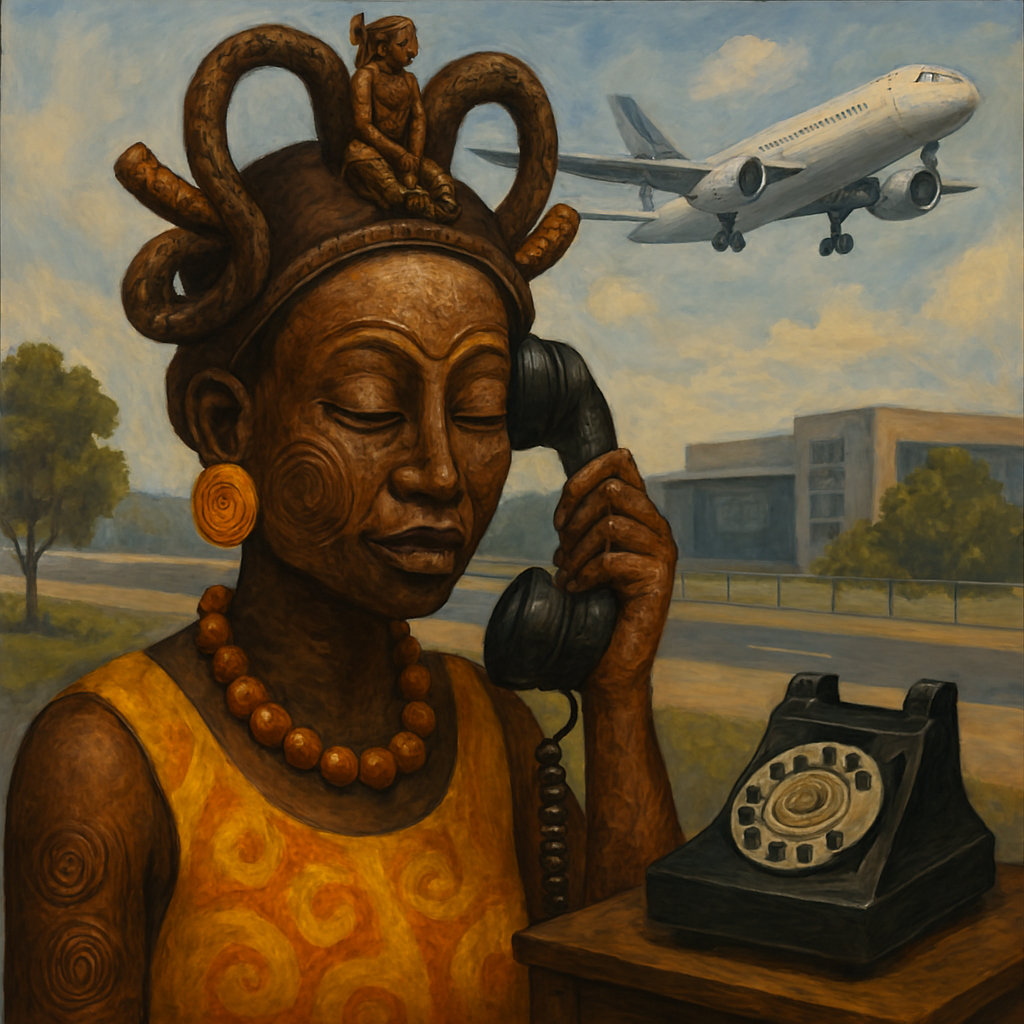
Harnessing modern tools, ranging from telecommunications and transportation to digital documentation, offer unprecedented opportunities to preserve, transmit, and revitalise ancestral knowledge. When thoughtfully integrated, modern systems can extend the reach of rituals like Ekpaeku, reconnect dispersed communities, and safeguard traditions against EDAME effect. The challenge is not to resist change, but to ensure that adaptation strengthens rather than compromises the integrity of Ejagham identity.
At this pivotal moment, the responsibility rests with all Ejagham people, at home and in the diaspora, to champion the preservation and promotion of Ekpaeku. This means learning its protocols, teaching its meaning, supporting its practice, and refusing to allow the forces of EDAME to define the future of our heritage. Every family, every village, every cultural association, and every Ejagham individual has a role to play. The continuity of Ekpaeku will not be secured by a few custodians, but by a united community committed to honouring its ancestors and safeguarding its identity.
Ekup na nkad
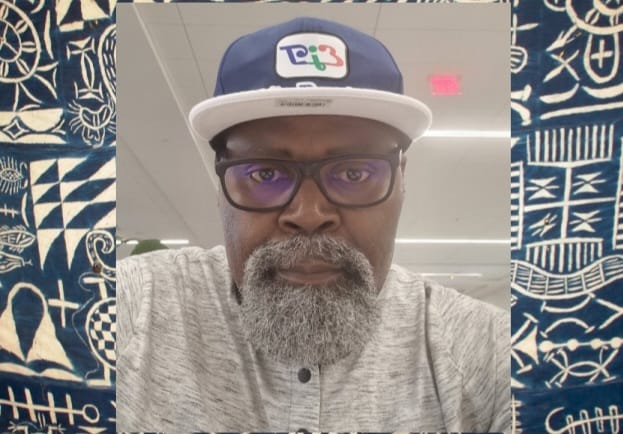
Ntufam Engr. Chris Anom CEng, CMarEng, FIMarEST, FRINA