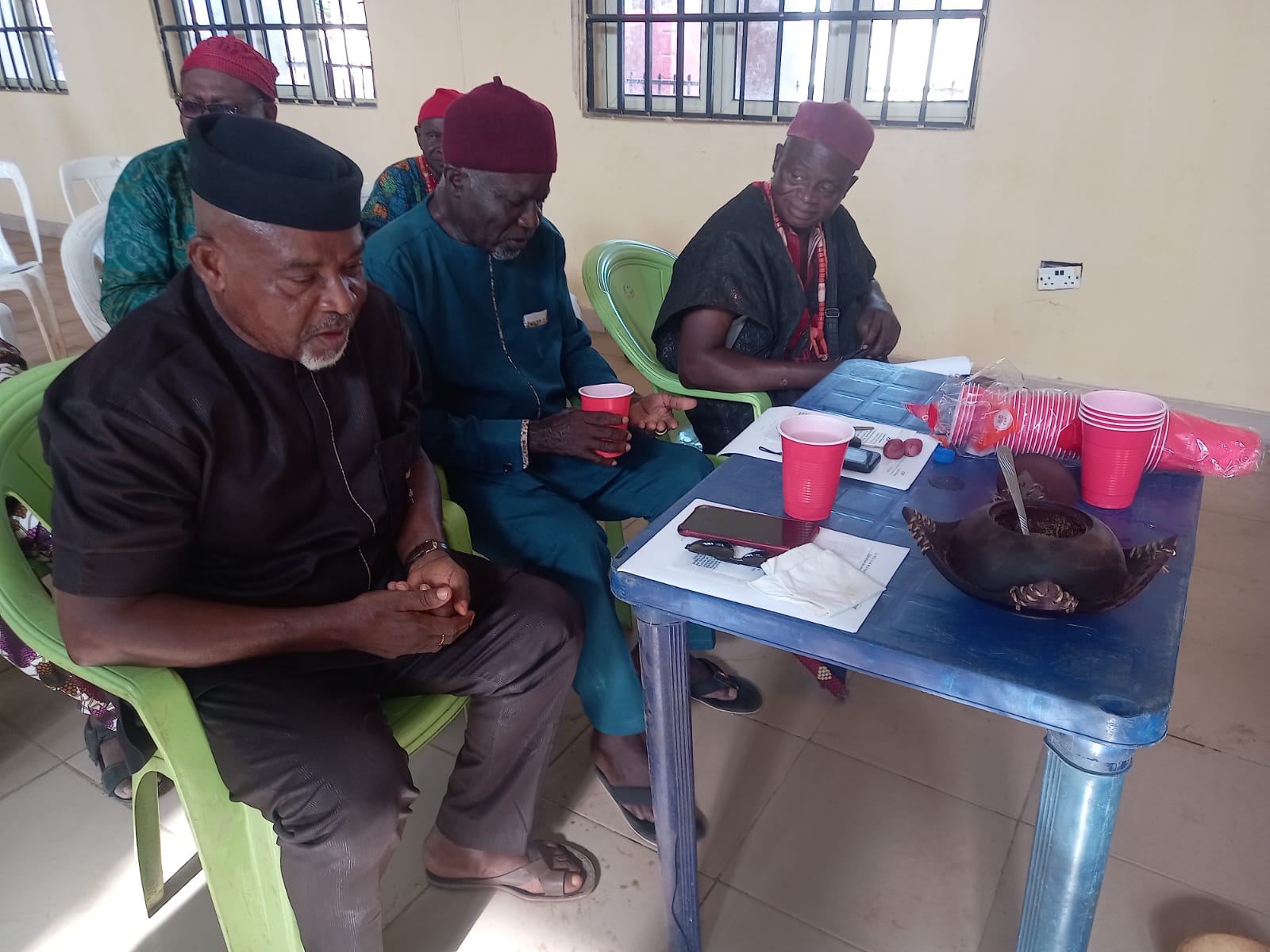
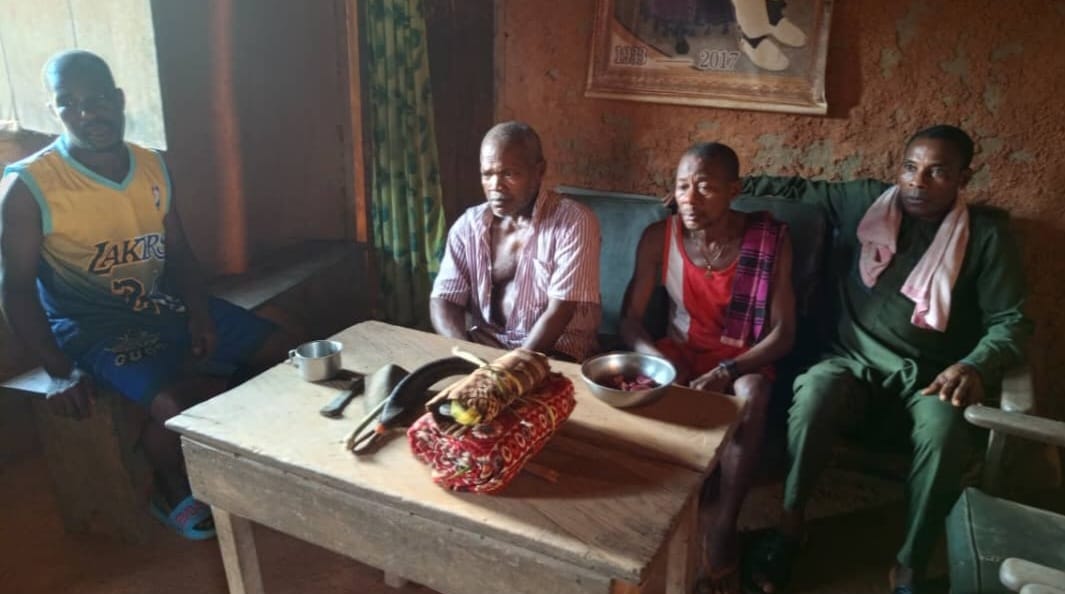

The Ekpaeku Homecoming in Ogurang: Two Souls, One Path
Overview
Part 1 of Ekpaeku: Ritual Symbolism in Ejagham Cosmology presented a narrative overview of the foundational principles, meanings, and ritual logic that shape the Ekpaeku tradition. Part 2 shifts from theory to lived experience. It offers a contemporary case study, an affirmation that the practice remains vibrant, relevant, and resilient despite the pressures of modernity, migration, and cultural mutations.

Nta Ekem Festus Egbe from Babong, Ejagham Njemaya
This lived experience documents the Ekpaeku ritual as witnessed by Nta Festus Egbe on 27 December 2025 in Ogurang. It provides a detailed account of the ritual’s sequence, atmosphere, and symbolic actions, while situating the event within the broader historical and cosmological framework of Ejagham funerary practice. The ceremony cantered on the symbolic homecoming of two souls, a mother and her daughter, who passed away far from their ancestral land.
Their ritual return to Ogurang not only fulfilled a profound spiritual obligation but also illuminated the enduring depth, adaptability, and cultural sophistication of Ejagham mortuary tradition. Through this contemporary enactment, the community reaffirmed its commitment to ancestral continuity, demonstrating that Ekpaeku remains a living bridge between the past and the present, the living and the dead, the homeland and the diaspora.
The Loss of Two Lives: Why Ekpaeku Was Required
In 2025, the Ogurang community was confronted with the painful loss of two family members who passed away outside their ancestral homeland. According to Ejagham belief, the spirits of the deceased cannot remain in foreign soil. To do so would leave them spiritually displaced, unable to join their ancestors or receive the rites that affirm their identity and belonging.
Thus, the family undertook the sacred responsibility of Ekpaeku, the conveyance of symbolic relics of the deceased back to Ogurang. This ritual ensures that the spirits of the departed are guided home, acknowledged, and reintegrated into the lineage from which they came.
Afuk Aku: Opening the Spiritual Path
Before the journey could begin, the ritual opened with Afuk Aku, the pouring of libation at the place where the deceased had passed away. This act is foundational in Ejagham cosmology. Through Afuk Aku, prayers are offered to the deceased and to the ancestors, invoking their guidance, protection, and companionship throughout the journey.
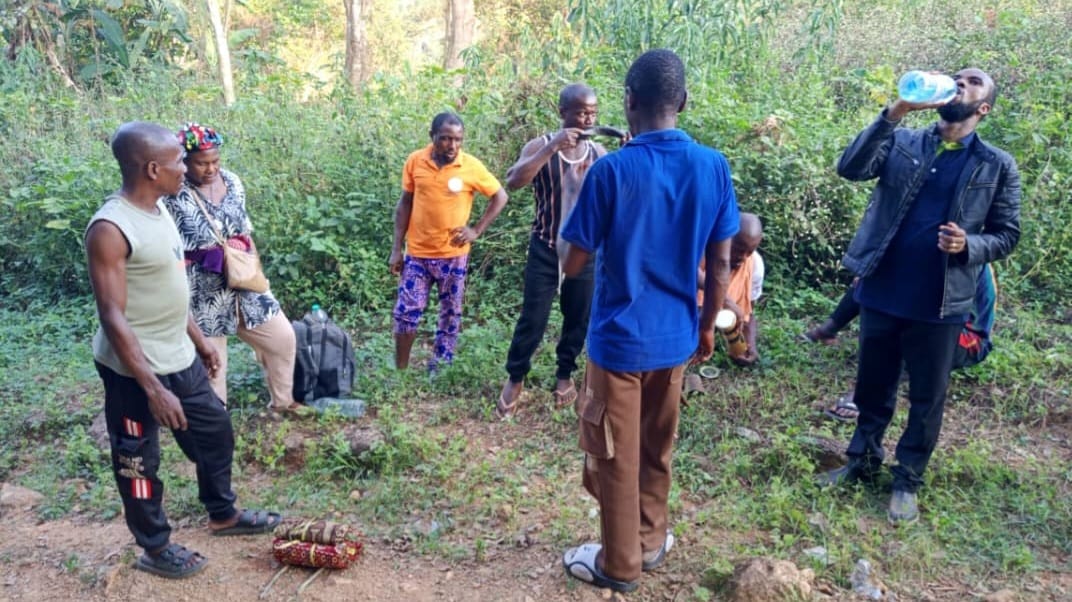
Afuk Aku is enacted prior to raising the Mkpaeku positioned on the ritual twin sticks on the ground.
Afuk Aku serves several purposes:
-
- It announces to the spiritual realm that the journey is about to begin.
- It requests permission from the ancestors to guide the deceased home.
- It clears the path, ensuring that no spiritual obstacles hinder the passage.
- It binds the living and the dead, affirming that the community has not abandoned its own.
Only after Afuk Aku is performed can the Ekpaeku be lifted and the journey commence.
The Bearer: A Daughter’s Burden, A Sister’s Devotion
To fulfill this sacred obligation, the family appointed the surviving daughter and sister of the deceased as the bearer of the two Ekpaeku. This role is deeply symbolic. It is never assigned lightly, for the bearer becomes the physical and emotional vessel through which the deceased are guided home.
As she lifted the Ekpaeku onto her head, she assumed a role that demanded:
-
- physical endurance,
- emotional strength,
- spiritual readiness,
- and ancestral responsibility.
Her steps became the steps of the dead. Her tears became the voice of grief. Her presence at the head of the procession signified devotion, duty, and the unbroken bond between the living and the departed.
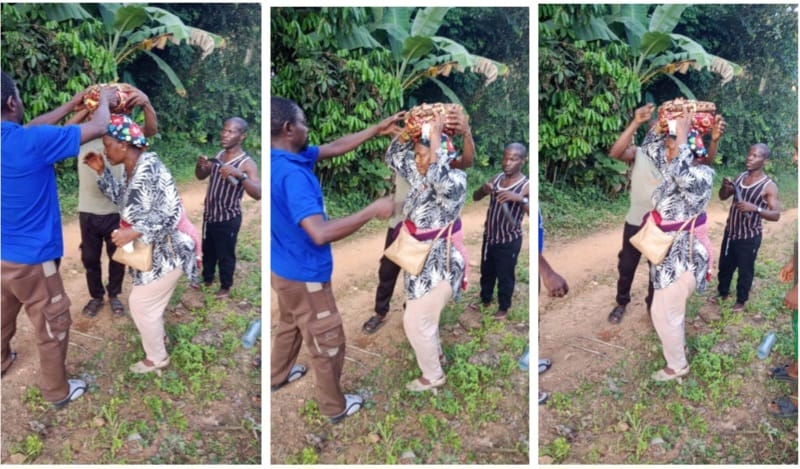
The paired Mkpaeku, mother and child, are hoisted onto the bearer’s head in solemn ritual.
It is customary, almost expected, for the Ekpaeku bearer to weep openly during the journey. The emotional weight of carrying the symbolic bodies of loved ones often overwhelms the bearer. Members of the escort team periodically consoled her, urging her to take heart and maintain composure so that the journey could be completed without interruption.
The Procession to Ogurang: Sound, Movement, and Ritual Presence
The journey from the place of death to Ogurang unfolded with ritual precision. The escort team, comprising family members, friends, sympathisers, and village delegates, walked alongside the bearer, offering support and ensuring that the Ekpaeku was never left unattended.
Throughout the procession, the air was punctuated by:
-
- the intermittent blowing of the Ibang,
- the steady rhythm of the Okangkang,
- and the soft crying of the bearer.
These sounds served as ritual announcements, alerting all within earshot that a sacred procession was approaching. They also functioned as protective signals, ensuring that the path was spiritually cleared and that the community was prepared to receive the Ekpaeku.

The Ekpaeku bearer, visibly mourning, proceeds toward Nju‑Eku with the accompanying delegation.
Arrival at Echi‑etek: Crossing into Ancestral Territory
Upon reaching Ogurang, the procession halted at Echi‑etek, the traditional entry point into the community. Here, the Ekpaeku was received by designated delegates of the village. A second libation was performed, informing the deceased that they had reached their homeland and must prepare to rejoin their family and ancestral lineage.
This moment is deeply symbolic. It marks the spiritual transition from foreign soil to ancestral ground. It affirms that the deceased have been successfully guided back to their rightful place.
Reception at Nju‑eku: Acceptance and Ritual Reintegration
From Echi‑etek, the procession continued to Nju‑eku, where elders and community members awaited their arrival. The reception was solemn and dignified, marked by:
-
- women’s ululations,
- slow, deliberate gong beats,
- and the formal acknowledgment of the Ekpaeku as a returning member of the community.

The Ekpaeku bearer and delegation arrive at the deceased’s family home in Ogurang.
Once the reception settled, tradition required the family to provide a clear narration of the circumstances surrounding the deaths. This account was reviewed by the elders, who needed to be satisfied that all necessary information had been disclosed. Only after this ritual disclosure could the Ekpaeku be formally accepted into the community.
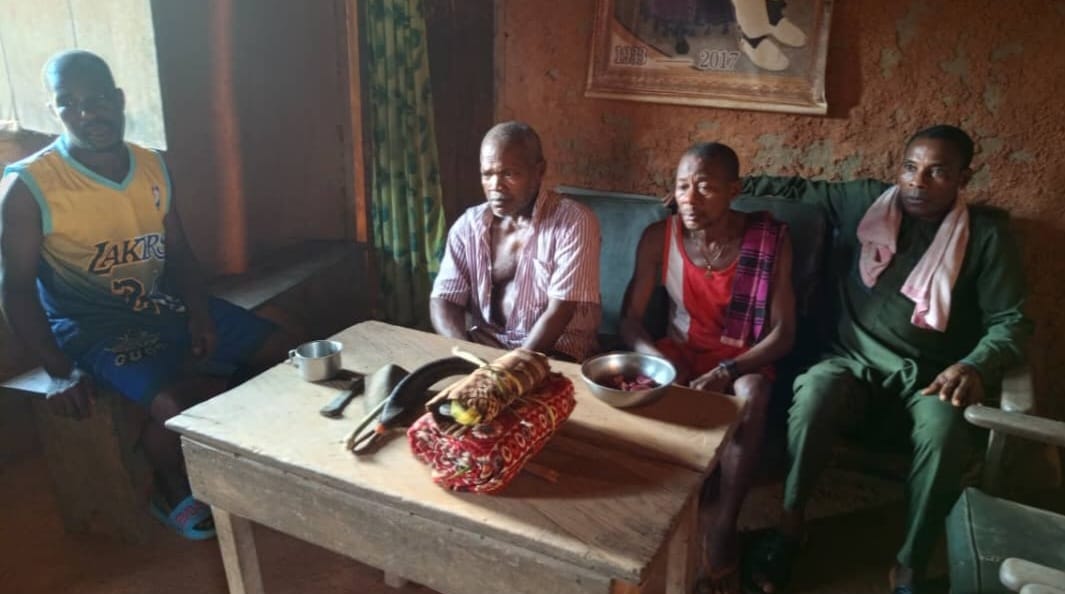
Elders receive the Ekpaeku at Nju‑Eku and elevate it upon the ritual twin sticks on the table.
Once accepted, all remaining funeral rites proceeded in accordance with established Ejagham customs, as though the physical bodies were present.
Enare: Cleansing, Protection, and Spiritual Safety
In this particular case, and in consideration of time, the ritual of Enare, performed to remove mbibi (spiritual affliction or misfortune), was conducted on the same day the Ekpaeku arrived. During this ceremony, the Iyamba performed Nnare, invoking God and the ancestors to shield the family from any lingering mbibi and to ensure their continued protection.
Enare serves as both a cleansing and a safeguard. It reaffirms the community’s commitment to spiritual balance, collective well‑being, and the restoration of harmony after loss.
Deduction: The Meaning of the Ekpaeku Homecoming
The Ekpaeku ritual is more than a funeral practice. It is a declaration of identity, belonging, and continuity. It affirms that:
-
- distance cannot sever the bond between a person and their ancestral home,
- death does not erase membership in the community,
- and the living bear responsibility for guiding the dead safely into the ancestral realm.
The 2025 Ekpaeku homecoming in Ogurang, “Two Souls, One Path”, stands as a powerful testament to the resilience of Ejagham tradition. It reveals a people deeply committed to memory, lineage, and the sacred duty of bringing their own home, no matter the distance.
Part 3 Loading …
Ekup na nkad